

Finding the best pre-seed investors means looking past universal rankings to find the firm whose first check, stage requirements, and follow-on strategy match your company's exact milestone. A pre-seed round acts as a market label rather than a rigid legal category, and an early institutional check might fund a technical breakthrough, a minimum viable product, or initial revenue generation.
The U.S. Securities and Exchange Commission explains that labels such as angel, seed, and Series A do not determine the specific securities-law exemption a company uses to raise capital, and it identifies pre-seed as an early company stage. Because friends-and-family investors, angel investors, and venture capital funds differ in the company stages they target, their investment structures, their level of involvement, and the scale of their investments, those differences shape how founders raise capital.
Finding a capital partner means moving past reputation and tracking current deployment behavior. The EverythingVC database on EverythingStartups helps you build a current, filterable shortlist based on real-time market data. Sorting the platform by check size, lead-investor status, and emerging manager activity gives you a focused shortlist, which you can then compare with each firm's public website to verify final terms.
The comparison table below outlines the stated criteria for several active U.S. programs as of September 2026. Public check sizes reflect target ranges rather than guarantees of availability, typical ownership, or investment performance.
How This List of the Best Pre-Seed Investors Works
| Investor | Best fit | Published current terms or stage | Geography and thesis | Key caveat |
|---|---|---|---|---|
| Y Combinator | Standardized accelerator investment, broad network, fundraising signal | $125,000 for 7% (post-money SAFE) plus $375,000 (uncapped MFN SAFE) | U.S., Canada, Cayman Islands, Singapore; broad tech | The $500,000 total involves an MFN SAFE that converts at later terms, increasing dilution beyond the initial 7%. |
| Pear VC | High-touch company building, recruiting, fundraising support | $250,000 to $2 million for direct pre-seed investments | Broad sector coverage including AI, SaaS, deep tech, healthcare | Pear leads rounds directly, operating distinctly from the PearX program. |
| PearX | Structured early-stage acceleration | $500,000 to $2 million across a 12-week program | Solo founders, idea-stage teams, early traction | Program deadlines change constantly; verify application windows on the live site. |
| Afore Capital | First institutional round before strong traction | $500,000 to $2 million or more for early-stage software | U.S.-focused software; ideation through early revenue | Evaluate the firm's typical first check rather than assuming the $2 million maximum. |
| Precursor Ventures | Generalist capital leaving room for syndicates | Up to $500,000 in pre-seed and seed rounds | U.S., Canada, Mexico; software and hardware | Confirm the exact check size and follow-on strategy for the current fund. |
| Hustle Fund | Smaller first checks with rapid decisions | $150,000 first check; 24 to 48-hour response after founder call | U.S., Canada, Southeast Asia; software generalist | A $150,000 check will not anchor a full round; evaluate the firm as a syndicate participant. |
| 2048 Ventures | Technical founders in AI, deep tech, or health | $500,000 to $3 million; Pre-Seed Fast Track targets $250,000 to $750,000 | Primarily NYC and Boston; emphasis on data moats | Published funding timelines vary across pages; treat them as process claims, not guarantees. |
| South Park Commons | Technical founders pre-launch or pre-idea | Founder Fellowship provides $400,000 for 7% (SAFE) plus $600,000 guaranteed next round | Technical researchers and operators exploring frontier tech | The separate six-month residency requires no equity and provides no direct capital. |

Best Pre-Seed Investors for Access and Company Building
Y Combinator: Broad Startup Access
Founders seeking a standardized accelerator experience often start with Y Combinator because the firm provides a broad startup network, structured curriculum, and a strong fundraising signal to the wider market.
The Y Combinator Standard Deal currently structures its $500,000 investment in two parts, investing $125,000 for 7% equity through a post-money SAFE and adding $375,000 through an uncapped SAFE with a Most Favored Nation (MFN) provision. The deal includes a right to participate in later financing rounds, and YC says it charges no fees for companies to be part of YC. Because the MFN SAFE automatically converts in the priced round on the terms of the lowest-cap SAFE or other most favorable terms issued between the MFN start date and that round, the structure includes equity beyond the initial 7%, so the full impact is best modeled using the separate SAFE documentation and pro rata language. The firm invests in U.S., Canada, Cayman, and Singapore corporations, so companies incorporated elsewhere must flip their corporate structure to have a parent company in one of those countries if they're accepted.
Pear VC: High-Touch Direct Investing
Founders looking for an active lead investor often target Pear VC because the firm provides high-touch company building that extends far beyond writing a check.

Direct investing through Pear VC operates separately from its accelerator program. The current public guidelines list a $250,000 to $2 million pre-seed range, explicitly noting that the firm leads pre-seed rounds across a broad thesis covering artificial intelligence, consumer technology, software-as-a-service, enterprise infrastructure, healthcare, deep tech, fintech, and biotechnology. By taking a lead role, the firm frequently helps set terms, price the round, and coordinate syndicate participants.
PearX: Structured Pre-Seed Program
PearX provides a different vehicle within the same overall platform, offering a 12-week program for teams needing comprehensive operational support.
The published program range spans $500,000 to $2 million, and PearX remains open to idea-stage companies, teams with early traction, or solo founders who have not yet finalized their cap table. Participants receive structured support across technical recruiting, customer discovery, sales motion design, fundraising preparation, and founder-to-founder connections. Direct fund investments and PearX cohorts provide different services, so the key distinction for founders is which entity is investing and what specific support applies to their round.
PearX W27 applications show a regular deadline of October 4, 2026, as accessed in September 2026. Program deadlines shift frequently, so checking the live page before submitting materials prevents missed windows.
Best Pre-Seed Investors for Early Software
Afore: Pre-Traction Software
Early software startups raising their first institutional capital frequently match with Afore Capital, a firm that specializes in writing meaningful checks before a product reaches market maturity.

Afore currently states that it invests $500,000 to $2 million or more in early-stage software companies across multiple industries, evaluating teams from ideation through early revenue. Because Afore publicly signals a willingness to invest before a product, traction, or a fully developed company structure exists, it fits founders seeking a substantial early commitment. Clarifying what amount the firm plans to invest in your current round helps determine whether they intend to lead the financing or follow another institutional investor.
Precursor Ventures: North American Generalist
North American founders building software or hardware often approach Precursor Ventures for an early check that leaves room for domain-specific angels.

Precursor typically invests up to $500,000 in pre-seed and seed rounds, focusing heavily on companies headquartered in the United States, Canada, and Mexico while remaining open to other geographies. By applying a generalist approach that evaluates team quality before product execution, Precursor provides flexibility for unproven concepts, and the firm also maintains stated reserves for subsequent financing rounds.
Compare First-Check Size With the Next Milestone
A published maximum check limit rarely represents a firm's normal deployment behavior, so the practical check size is the more useful measure. For example, Afore provides a strong fit for a larger first institutional software round, while Precursor offers a meaningful but more modest first check that preserves room for other investors.
EverythingVC on EverythingStartups helps address the discovery problem by allowing you to map these variables against active funds. Filtering the database for pre-traction software investors, specific check ranges, target geographies, and emerging-manager status builds a targeted list of early stage VC firms, and you can verify the current deployment focus against each investor's primary website before initiating contact.
Best Pre-Seed Investors for Smaller Checks and Specialized Rounds
Hustle Fund: Smaller First Checks
Founders with a functional software prototype who need a rapid decision often prioritize Hustle Fund because the firm trades large anchor checks for speed and broad accessibility.
The current Hustle Fund FAQ describes a pre-seed focus for initial investments and a $150,000 first check. The firm identifies companies that have built at least a minimum viable product as its sweet spot, operates as a software generalist with no preferred vertical, and invests mostly in the United States, Canada, and Southeast Asia. Hustle says founders most often receive a response 24 to 48 hours after a call, but it explicitly notes that its small first check won't fund the bulk of a round. So evaluate the firm as a first-check investor or as an investor alongside an existing lead rather than assuming it will anchor the entire financing.
2048 Ventures: Vertical AI and Deep Tech
Technical founders building data-heavy companies in specific East Coast ecosystems align well with 2048 Ventures, a firm that targets founders pursuing complex technical moats.

Operating primarily in New York City and Boston, 2048 lists a $500,000 to $3 million check range for pre-seed and seed rounds with an emphasis on vertical artificial intelligence, deep tech, health, and bio companies. The specialized Pre-Seed Fast Track publishes a $250,000 to $750,000 check range for an ideal $500,000 to $1.5 million round, stating a goal of funding within 10 business days. Because the main homepage concurrently claims a 10- to 15-business-day lead-commitment timeline, both figures are best treated as published process goals and verified directly with the partnership.
South Park Commons: Technical Founders Before Launch
Operators and researchers exploring entirely new concepts before product launch find a unique structure at South Park Commons, an organization that bridges community incubation and early venture funding.
The Founder Fellowship publishes a structure providing $400,000 for 7% through a SAFE, alongside $600,000 guaranteed in the next venture round. Operating separately from the six-month member residency, which carries no cost or equity requirement, the fellowship targets technical founders transitioning from pre-idea to pre-launch phases. Support focuses on conviction-building, initial product development, customer discovery, founder matching, and follow-on fundraising preparation. Comparing the fellowship's speed, specialization, network density, and program structure against traditional venture funds helps clarify which path fits your timeline.

How to Compare Investor Fit and Terms
Stage, Product Bar, and First Check
Because every investor evaluates traction differently, the key question is whether the partnership funds pre-product companies, expects an active MVP with pilot revenue, or evaluates mainly the founding team's credentials. For example, Afore targets ideation and pre-traction software and PearX welcomes idea-stage eligibility, whereas Hustle Fund designates a functional MVP as its ideal entry point. Recording a minimum initial check, a typical initial check, and maximum follow-on capacity for every target fund keeps your comparison grounded in data.
Lead Role, Support, and Follow-On
Investors choose specific roles in a financing event, so identifying whether a firm will lead the round, set the valuation, negotiate terms, seek a specific ownership percentage, or strictly follow another lead investor changes your pitch strategy. Pear VC and 2048 Ventures publicly position themselves as lead investors capable of pricing a round, while Hustle Fund explicitly designs its model around smaller participation checks. The choice also affects how much syndicate-building remains: a larger check can reduce that workload, while a smaller check preserves room for strategic angels and leaves you better prepared to assemble the remaining capital.
SAFE Terms, Dilution, and Conflicts
Comparing the complete financing structure beyond the headline cash figure means looking at recent portfolio fit, workflow knowledge, regulatory understanding, geographic compatibility, and potential competitor conflicts. A comprehensive review includes checking the post-money or pre-money SAFE classification, valuation cap, discount rate, MFN provisions, information rights, and observer seats, alongside how the investor treats the existing employee option pool and outstanding convertible notes. EverythingVC on EverythingStartups serves as the primary discovery layer for tracking these details, allowing you to apply this scorecard to a live database rather than relying on outdated industry reputation.

How to Find Active Investors with EverythingVC
Build a Live, Filterable Shortlist
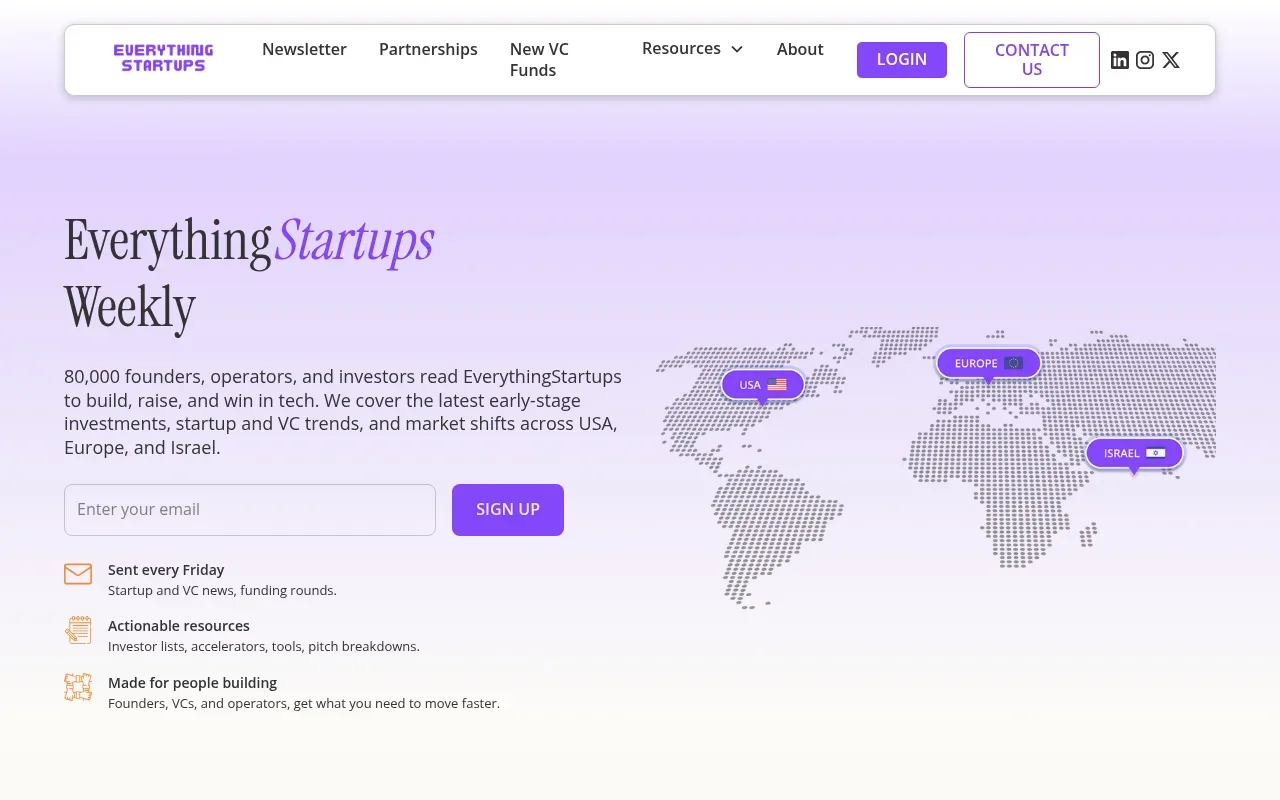
Relying on static industry lists produces high bounce rates and mismatched pitch meetings, but EverythingVC allows founders to filter the market by pre-seed stage, target check size, sector thesis, geographic focus, portfolio history, and emerging-manager status. The database provides direct contact details for active partners, giving founders a starting point to discover targets before verifying every material term, current application route, and recent deployment signal on the specific fund's website.
Separate Leads, Co-Investors, and Programs
An organized target pipeline separates investment roles and keeps outreach focused. A list of potential lead investors capable of setting terms and funding a substantial portion of the target round helps prioritize primary targets. Smaller seed funds, angels, and domain experts can form a co-investor list, while accelerators, fellowships, and founder communities fit in a separate programmatic tier. This structure prevents you from asking a strict co-investor to price your round.
Send Precise Outreach and Verify Current Activity
Formatting your outreach to match the investor's stated criteria shows you respect their process. A strong pitch clearly states what the company does, who the target customer is, and the current product status, alongside the total amount being raised and the specific milestone the round will fund. Including relevant validation metrics and closing with a clear meeting request keeps the message actionable. Date-stamping fast-changing application information, such as the PearX deadline, and reviewing recent press releases help confirm that the partnership actively deploys capital before you reach out.
EverythingVC also maps active emerging managers, newly launched funds, and sector-specific co-investors for venture capitalists and limited partners. Because a founder-facing list does not constitute an LP recommendation, separate LP diligence involves evaluating portfolio construction, follow-on reserves, key-person exposure, deal attribution, and long-term deployment pace.
Final Checks: Financing Process, Legal Notes, and FAQs
Confirm the Handshake and Model the Cap Table
Verbal commitments remain provisional until documented, making Y Combinator's Handshake Deal Protocol a useful process example for early rounds. The protocol follows a clear sequence: the investor states they are in, the founder sends the exact amount and terms in writing, and the investor confirms those exact terms via email. Before locking in any allocation, modeling your existing founder ownership, the planned employee option pool, all outstanding SAFEs, the incoming capital, and future pro rata rights against an expected priced round reveals the true cost of the capital.
U.S. SAFE and Securities-Law Context
Rule 506(c) permits issuers to broadly solicit and generally advertise an offering when all purchasers are accredited investors, the issuer takes reasonable steps to verify that status, and certain other conditions in Regulation D are satisfied. For that reason, a review with startup counsel can cover your SAFE documents, cap table, offering exemptions, and any investor side letters before you accept funds.
FAQ Block for Founders, VCs, and LPs
How much do pre-seed investors usually invest? Check sizes vary by fund model. Hustle Fund writes $150,000 initial checks, Pear VC targets a $250,000 to $2 million range, and Y Combinator offers a combined $500,000 standard structure.
Do pre-seed investors require an MVP? Requirements depend entirely on the specific investor. PearX and Afore Capital consider idea-stage companies and pre-traction software, while Hustle Fund describes an active MVP as its sweet spot.
Should I choose one lead investor or several smaller checks? A lead investor sets terms and reduces the time spent assembling a syndicate. A party round of smaller checks takes longer to coordinate but allows you to bring on multiple domain experts without giving up a single large block of ownership or a board seat.
Are accelerators considered pre-seed investors? Accelerators operate as programmatic early-stage investors, providing capital, structured curriculum, and a cohort network in exchange for standard equity.
What is the difference between a SAFE and priced equity? A SAFE defers the valuation of the company until a future financing event, whereas priced equity sets an exact valuation immediately by issuing specific shares at a determined price during the current round.
How do I know whether a fund is still investing? EverythingVC can help monitor recent fund announcements, review the firm's blog for new portfolio additions over the last six months, and check partner social feeds for active deployment signals.
Can solo founders raise pre-seed funding? Programs like PearX publicly welcome solo founders, though investors typically expect them to demonstrate strong technical capability or a clear plan to recruit a technical co-founder using the raised capital.
How do I find pre-seed investors outside Silicon Valley? While firms like 2048 Ventures focus on New York and Boston and Precursor Ventures covers the broader United States, Canada, and Mexico, finding partners elsewhere often involves using a new VC funds database to filter investors by preferred geography and local ecosystem presence.
Discover the next generation of companies and map early-stage capital movement across the US, Europe, and Israel. Track emerging managers, filter new funds, and streamline your deal flow with the EverythingVC database at EverythingStartups.


