

Evaluating private-market databases means untangling overlapping feature lists to find the tool that fits your daily work. Dealroom and PitchBook both track the movement of capital across the technology sector, but they approach that data from entirely different directions. A direct comparison of dealroom vs pitchbook comes down to whether you spend your day mapping early-stage startup ecosystems or benchmarking institutional fund performance.
EverythingStartups provides a targeted intelligence layer. We track newly launched funds, emerging managers, and the exact check sizes moving across early-stage capital markets. Before committing thousands of dollars to a broad data platform, you can start with our specialized database to find active capital partners.

Dealroom vs PitchBook: Comparing Core Data Models
The Primary Distinctions
Dealroom operates as a discovery engine built around early-stage ecosystems. It surfaces companies before they announce massive funding rounds, tracking founder movements, local startup hubs, and emerging technology sectors. The platform relies on ecosystem partnerships and continuous data collection to map the venture market from the ground up.
PitchBook operates as an institutional private-capital platform built around transactions and allocator mandates. It untangles complex financing histories, series terms, fund returns, and limited partner commitments. You can use it to benchmark performance, analyze cash flows, and connect private equity activity with broader capital markets.
Adding Specificity with EverythingStartups
Broad databases collect millions of records, which can obscure the specific people actively deploying capital this month. We focus exclusively on actionable early-stage data for the US, Europe, and Israel. When your immediate goal involves locating a new fund manager, checking a specific investment thesis, or finding a direct LP contact, EverythingStartups provides that exact intelligence without the overhead of an enterprise subscription. Our data complements larger tools by solving the narrow, high-friction problem of active fund discovery.
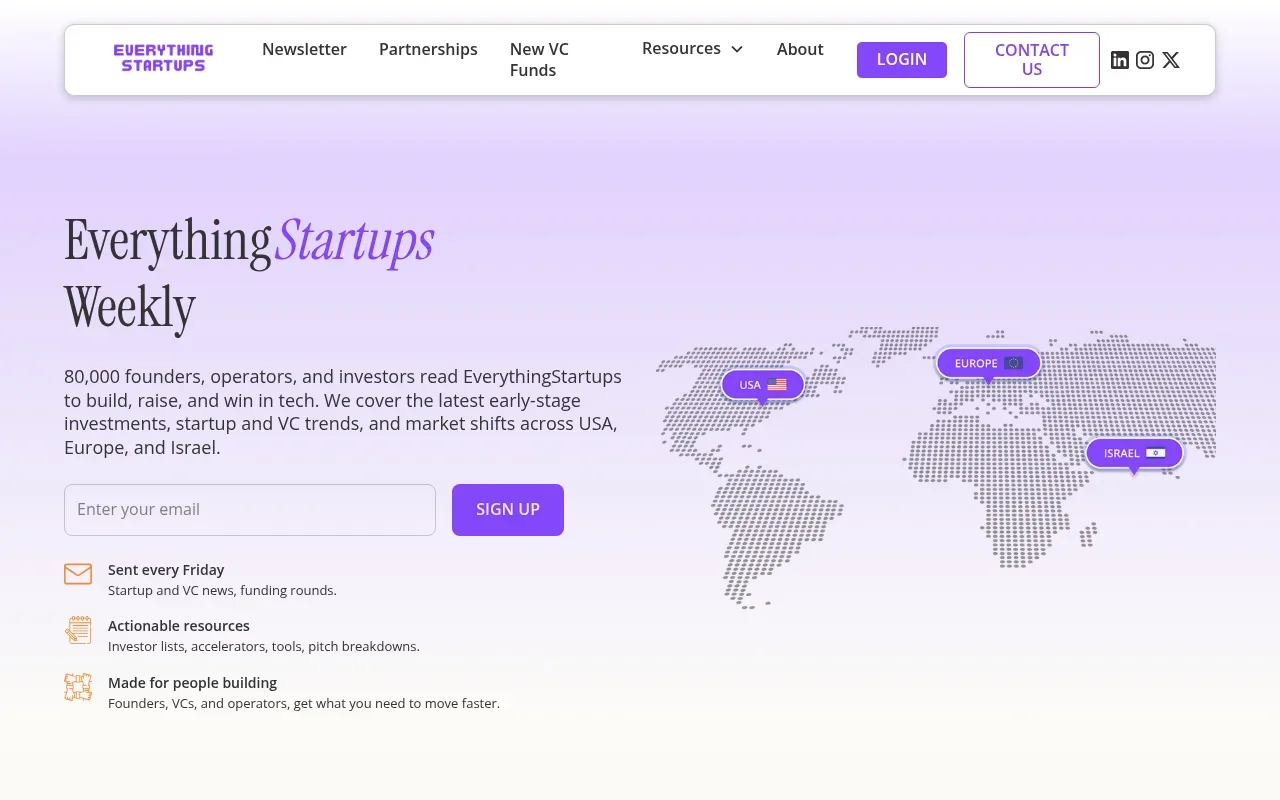
EverythingStartups: Targeting Early-Stage Capital
New Funds and Emerging Managers
Finding capital often requires targeting managers who are actively building their portfolios rather than established firms resting on deployed funds. EverythingStartups tracks these newly launched vehicles, and our core EverythingVC database isolates fresh funds with immediate capital to deploy. This precision helps you avoid pitching partners who lack available reserves, while allowing venture scouts to identify co-investment opportunities early in a fund's lifecycle.
Thesis, Check Size, and Contact Research
A fund's website rarely tells the whole story about its current investment behavior. We document the specific parameters that determine whether a firm will write a check, allowing you to filter our new VC funds database by core investment thesis, average check size, and recent portfolio history. We also provide direct contact details for these emerging managers and their limited partners. Starting with a verified list of active decision-makers saves weeks of manual research.
How It Complements Broad Databases
A focused tool does not replace a comprehensive database, so you use them in sequence. If you are planning a pre-seed round, you can review our startup accelerators for tech companies to identify early backers, then run those names through Dealroom to map their broader co-investor networks. To track recent market moves, you can read our weekly newsletter for the latest funding announcements, then open PitchBook to examine the historical cap tables of the companies involved. Starting with a curated list of active participants makes your enterprise database searches far more precise.

Dealroom: Strengths in Ecosystem Discovery
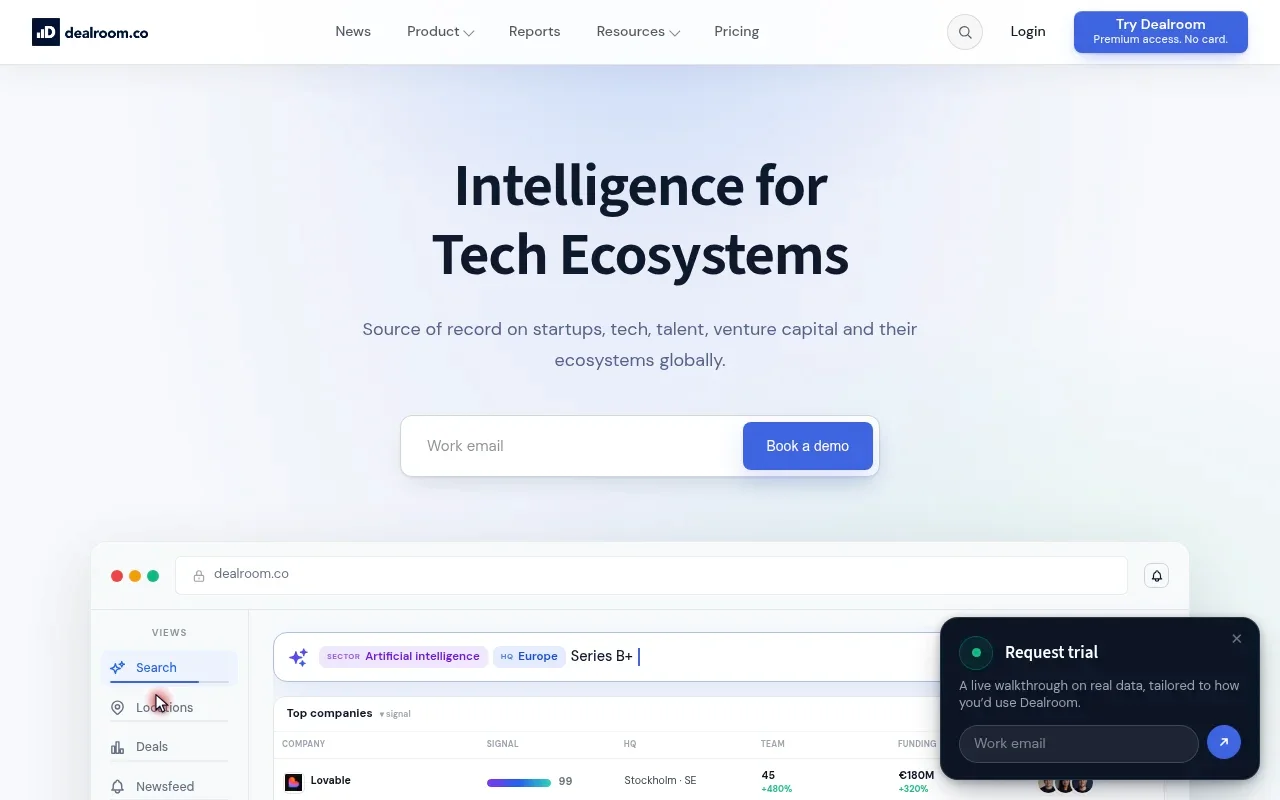
Startup Discovery and Investor Matching
Dealroom excels at finding companies before they become obvious. The platform lets you filter the startup universe by sector, specific technology, funding stage, and launch year. Screening by business model and proprietary growth signals helps you track traction ahead of formal fundraising announcements. Investor matching follows a similar logic, letting you build target lists based on a firm's headquarters, portfolio industry, preferred investment stage, and historical portfolio size.
Ecosystem Maps, Alerts, and Founder Access
Understanding where innovation happens requires regional context. Dealroom has more than 100 ecosystem partners, and its government partnerships power local startup databases with data on startups and venture capital activity. The platform also covers high-growth companies and tech ecosystems worldwide.
Data and Technical Access
Automated systems and human verification work together to maintain the underlying dataset. Dealroom pulls from trade registers, public filings, news sources, and predictive models, refreshing its market data continuously. You can pull this information into your own workflows using REST APIs, bulk data exports, or CRM connections. For advanced operations, selected plans include access to a hosted MCP server, which allows you to interact with startup records programmatically.
PitchBook: Strengths in Institutional Diligence
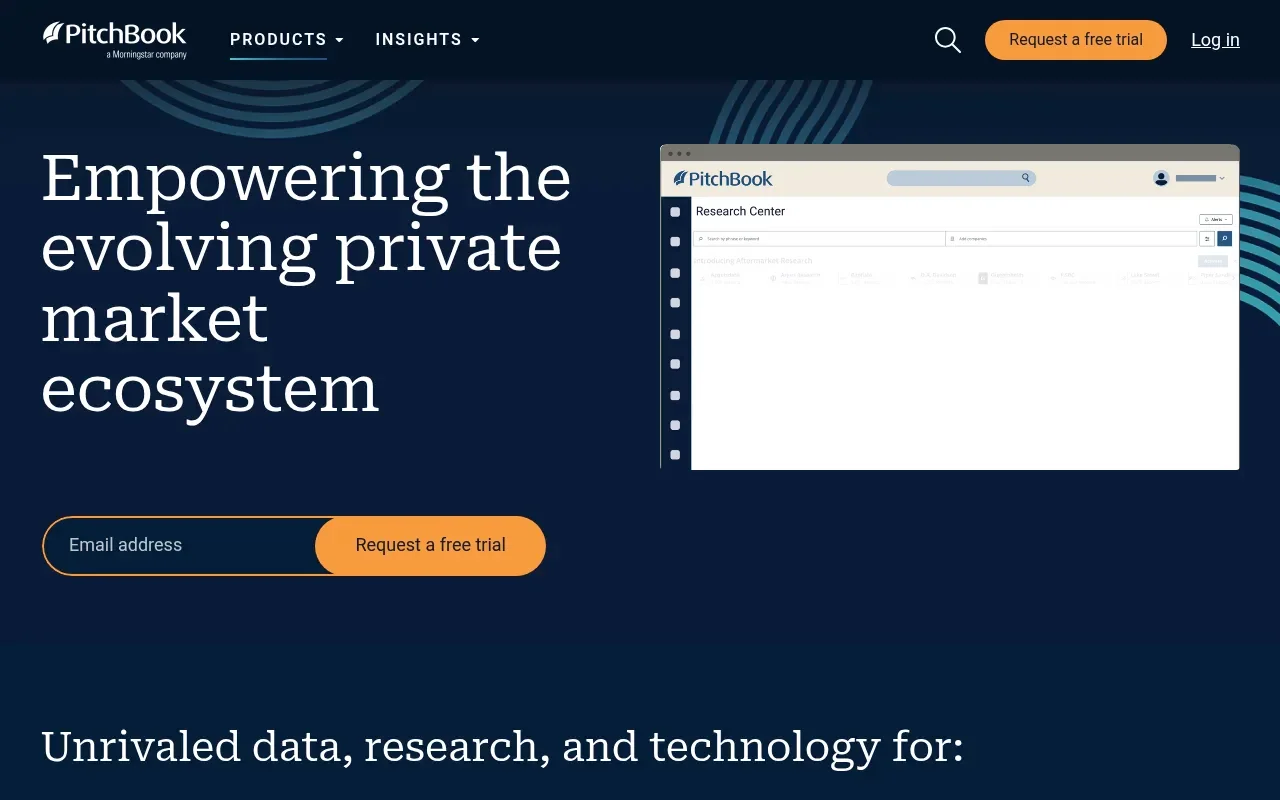
Transaction and Company Research
PitchBook provides detailed visibility into the mechanics of private transactions. When you open a company profile, you find financing histories, revenue estimates, pre-money and post-money valuations, and detailed cap tables. The platform tracks series terms and liquidation preferences where available, delivering the structural details required to evaluate a complex deal. This focus extends across the entire private equity market, capturing credit markets and M&A activity far beyond traditional venture capital.
Funds, LPs, and Performance
Allocator research requires precise return data. PitchBook documents fund-return metrics including IRR, DPI, RVPI, TVPI, distributions, and cash flows for institutional vehicles. You can analyze a specific limited partner to understand their historical commitments, current mandates, preferred fund types, and geographic allocations. This strict financial tracking serves teams benchmarking their portfolios against broader market performance, providing return analysis that goes far beyond measuring a manager's high-profile exits.
Enterprise Research Workflow
PitchBook integrates directly into standard financial routines through dynamic screeners, saved searches, and automated alerts for specific transaction types. You gain access to curated vertical reports and benchmarking studies from the PitchBook Research Center. On the technical side, the company offers API endpoints, Data Feeds, and direct CRM integrations alongside plugins for Excel, PowerPoint, and Chrome. This extensive tooling ensures you can pull valuation multiples directly into your financial models without leaving your spreadsheets.

Comparing Dealroom and PitchBook by Workflow
| Feature Area | Dealroom | PitchBook | EverythingStartups |
|---|---|---|---|
| Primary Focus | Early-stage startup discovery, venture ecosystems, and market mapping. | Institutional private capital, transactions, fund performance, and LP mandates. | Newly launched funds, emerging managers, and early-stage capital movement. |
| Investor Discovery | Filters by sector, stage, technology focus, and growth signals. | Analyzes historical deals, fund strategies, allocations, and private-market activity. | Isolates active emerging managers with specific check sizes and direct contacts. |
| Fund Performance | Uses a proprietary Power Law Score based on venture portfolio outcomes. | Tracks IRR, TVPI, DPI, distributions, and granular cash-flow metrics. | Details current investment thesis, portfolio history, and available check sizes. |
| Ecosystem Mapping | Extensive local dashboards powered by regional government partnerships. | Broad regional tracking with deep vertical research from in-house analysts. | Curated market intelligence focusing on US, Europe, and Israeli tech trends. |
| Pricing Transparency | Publishes exact list prices starting at €12,600 annually for three seats. | Requires a custom quote based on seat count, firm type, and requested add-ons. | Publishes straightforward subscription pricing for database and newsletter access. |
Founders and Early-Stage Fundraising
Building a target list requires knowing who invests in your specific category at your exact stage. Dealroom serves as an excellent starting point for this process, allowing you to map relevant seed or Series A firms quickly. PitchBook becomes highly useful during the diligence phase because, once an investor issues a term sheet, you can review their previous valuations and series terms to understand their standard operating procedure. We recommend securing your initial leads through EverythingStartups, mapping the broader category with Dealroom, and validating transaction histories in PitchBook if you have access.
VC Sourcing and Diligence
Sourcing new deals requires a different data set than evaluating them. If you operate a seed fund, you will likely spend more hours inside Dealroom, tracking new spin-outs, monitoring founder activity, and reading local market signals before companies hit the press. If you run a multi-stage or growth fund, you will lean on PitchBook to pull comparable valuations, analyze late-stage cap tables, and benchmark revenue multiples against public equities. Your strategy determines your tool: prioritize early detection with Dealroom, or focus on structural diligence with PitchBook.
LPs, Emerging Managers, and Cross-Border Research
Evaluating new allocations means looking at entirely different metrics. PitchBook leads this category with documented tracking of LP mandates, historical commitments, and precise cash-flow metrics. Dealroom approaches this from an outcome perspective, ranking limited partners based on the Power Law Score of the venture firms they back.
Cross-border tracking introduces another layer of complexity. PitchBook's documented VC transaction scope includes Israel from 2006 to the present, alongside broad data for North America and Europe. Dealroom covers these regions extensively through its network of local partners. When executing international research, you will need to verify local entity names and cross-border holding structures manually, because automated matching sometimes struggles with multi-national incorporations.
Pricing, Access, and Data Confidence
Published Prices and Free Access
Understanding the financial commitment upfront helps you allocate your software budget efficiently, and Dealroom publishes its pricing publicly to support this. Dealroom lists Premium at €12,600 per year and Premium Plus at €17,000 per year, with both plans starting from three seats. The page also describes a three-day free trial with Premium features, 50 export credits, and access to all company profiles and funding data.
PitchBook treats pricing as a custom variable. You request a quote, and the final number depends on your firm type, total seat count, and specific module requirements like Direct Data access or CRM integration. While PitchBook offers profile previews and allows firms to update their own records at no cost, full platform access involves a paid commercial subscription. Dealroom's transparency makes budget planning easier, though it does not guarantee a lower total cost once you add enterprise API rights.
Integrations and Implementation Fit
Data holds little value if it stays locked inside a proprietary web application. Dealroom supports startup-oriented workflows by offering bulk exports, CRM connectivity, and expansive REST APIs, while its hosted MCP server approach appeals to teams building internal market intelligence tools. PitchBook targets enterprise environments with a Data Feed, Salesforce integrations, and Microsoft Office plugins that update valuation models and quarterly presentations automatically. Review your internal tool stack carefully, as a robust API offers little benefit if your team strictly uses Excel.
Coverage, Freshness, and Accuracy
Both companies blend automated scraping with human validation. Dealroom ingests continuous streams of data from trade registers and news sites, checking those inputs against its network of regional partners. PitchBook runs web crawlers and natural-language processing models, backing that automated collection with secondary research and direct phone calls to investors and accountants.
Neither platform captures every private company perfectly, and automated systems sometimes misclassify bridge rounds or misinterpret unannounced board changes. You can test the accuracy of each platform by checking a few specific records you already know well. Looking up a recent deal you closed to examine the valuation, the lead investor designation, and the fund vintage reveals a lot. The database that most accurately reflects your known reality usually gives you the most confidence when you use it for research.
Final Verdict: Selecting the Right Platform
Which Tool Fits Which Job?
The distinction between these platforms comes down to the problems they were engineered to solve. Dealroom stands out for ecosystem discovery, making it the better choice if your core mandate involves tracking emerging technology sectors, monitoring founder movements, mapping regional startup hubs, or building top-of-funnel investor lists based on stage and sector relevance.
PitchBook excels at institutional diligence and transaction analysis. Select it if your team models pre-money valuations, benchmarks cash-flow returns, analyzes limited partner commitments, or needs detailed capitalization tables across multiple private asset classes.
A Combined Research Workflow
Effective capital allocators rarely rely on a single database. A modern research stack uses these tools in concert, applying the right database to the exact phase of the deal cycle.
- Start your search with EverythingStartups: Use our database to find newly launched funds, confirm available check sizes, and secure direct contact details for active emerging managers.
- Expand your view with Dealroom: Map the relevant sector, locate co-investors, and review local activity to understand the broader market context.
- Validate the details with PitchBook: Pull historical transaction data, check previous series terms, and benchmark the target fund's historical performance against industry peers.
- Confirm everything directly: Database matches provide a strong hypothesis, but you still need to confirm partner availability, current thesis alignment, and available reserves through direct conversation.
Common Questions About These Platforms
Are Dealroom and PitchBook the same thing? No. While they overlap in tracking venture funding, Dealroom focuses on startup hubs, market maps, and early discovery. PitchBook covers the broader private-capital market, including private equity, credit, and detailed fund performance.
Can founders use Dealroom for free? Yes, Dealroom offers a dedicated tier for founders that allows you to access public profiles, basic investor matching, and market maps without paying for a premium subscription. Full search capabilities, bulk exports, and custom alerts involve a paid plan.
Does PitchBook have a free trial? PitchBook provides limited public profile previews and allows firms to update their own data free of charge. Full access to their financial metrics, cap tables, and enterprise tools involves a commercial subscription or a formally requested trial through their sales team.
Are Dealroom’s LP rankings equivalent to PitchBook’s fund returns? They measure entirely different concepts. PitchBook calculates financial metrics like IRR and TVPI based on cash flows and distributions, whereas Dealroom calculates a Power Law Score based on the outcome success of the venture firms an LP backs. You cannot use one as a direct substitute for the other.
Which database has better data for Europe and Israel? Both maintain strong coverage across these regions. Dealroom draws on a vast network of local government and regional partners, making it highly detailed for European startup hubs. PitchBook explicitly tracks VC transactions across North America, Europe, and Israel, providing thorough transaction-level accuracy. Checking specific entity records in both will help you determine which format better suits your verification process.
EverythingStartups provides targeted intelligence on early-stage capital movement, helping you locate active investors and emerging managers quickly. Explore our new VC funds database to streamline your next fundraising round or market research cycle. Visit EverythingStartups today to find your next capital partner.


