Startup and VC databases can look alike at first glance, yet they answer different questions. A startup database describes companies: who founded them, how large the team is, and which funding rounds they have raised.
A VC database describes investors: which firms exist, what they invest in, and how big their checks are. A third kind tracks newly launched funds and emerging managers, which helps when you want to know who has fresh money to invest right now.
This guide compares nine platforms by what each does best, who it suits, and where it falls short. One of them is the EverythingStartups New VC Funds Database, which we build and update every week. Because it is our own product, we describe it with the same limits we apply to every other tool on the list.
Quick Picks by Use Case
- Newly launched VC funds and contact details: EverythingStartups New VC Funds Database
- Broad company and funding history: Crunchbase Pro
- Institutional fund and deal data: PitchBook
- European ecosystem and market mapping: Dealroom
- Detailed filtering across companies and investors: Tracxn
- Market trends and strategy research: CB Insights
- Finding early-stage startups before they announce a round: Harmonic
- A free-to-start investor list for founders: OpenVC
- Warm introductions through your own network: Signal by NFX
How to Choose a Startup or VC Database
Hundreds of directories exist, and the useful ones share a few traits. Check these three things before you pay for anything.
Decide What You Are Looking Up
A search for companies cannot replace research on funds. Startup-focused platforms show growth signals, competitors, and funding history. Investor-focused platforms show which firms are investing, at which stage, and with what check size. If your goal is to find newly launched funds, choose a tool built around funds, so your list is not filled with every angel who wrote a single check years ago.
Check How Fresh the Data Is
Static lists go out of date quickly. Look for filters by stage, sector, check size, and portfolio overlap. The best platforms also separate the year a firm was founded from the launch date of its current fund, which helps you tell past activity from money that is available today. Good databases also track recent rounds, new fund announcements, and hiring changes so you can decide whom to contact first.
Look at Sourcing, Exports, and Contact Details
A database only helps if it fits the way you work. Look for saved searches, alerts, export limits, CRM integrations, and API access. Contact details matter too, since some platforms give you a direct email address while others show a path to a warm introduction. Finally, ask where the data comes from.
Records checked by analysts and drawn from public filings deserve more trust than fields that users fill in themselves or that software estimates. Numbers a vendor reports about its own size, such as total companies or reply rates, are marketing figures that cannot be verified across competitors.
Best Startup and VC Databases in 2026: Comparison Table
Best Databases for Fund and Investor Research
This group suits you when your main question is who is investing and how much they have raised.
EverythingStartups New VC Funds Database: Best for Newly Launched Funds
The New VC Funds Database tracks venture capital funds soon after they are announced or closed, and it is updated every week.
A firm that has just raised a fund typically spends the next few years investing it, which makes recent launches a useful place to look for investors who are ready to write checks.
You can filter the list four ways:
- Fund focus, such as AI, fintech, climate tech, biotech, or cybersecurity
- Region of investment, from North America and Europe to Africa and Oceania
- Stage, from pre-seed through growth
- Check size, from $10K-$100K up to $10M-$20M
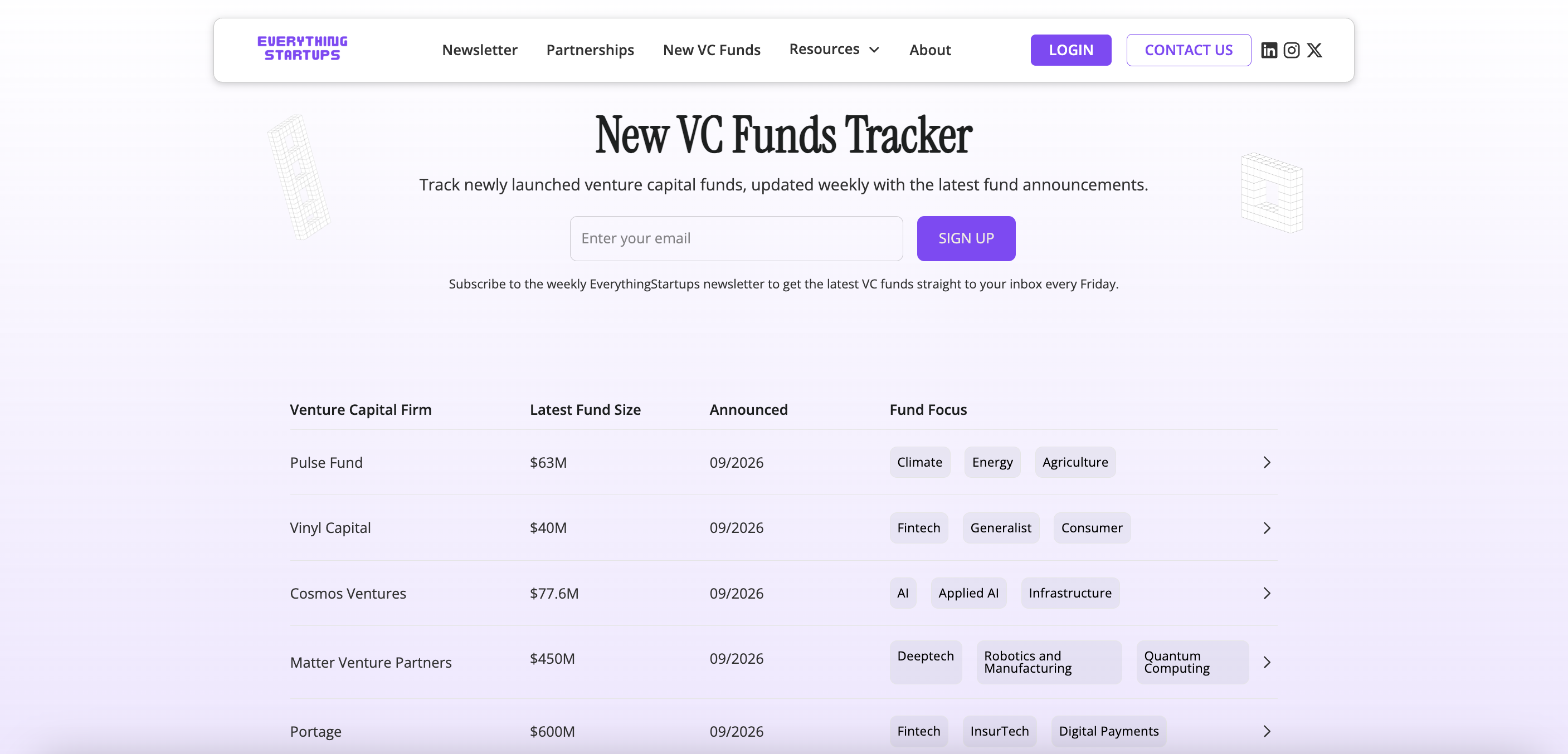
Members can open the full profile for each fund. A profile covers the investment thesis, stages and check sizes, headquarters and regions of investment, portfolio history and exits, the team and leadership, information about the limited partners (LPs) who backed the fund where it has been disclosed, and direct contact details.
Access is included in All Access at $19.99 per month or $192 per year, which works out to about 20% less than paying monthly.
The weekly EverythingStartups newsletter also sends the latest funds to your inbox every Friday.
The database covers funds, so it does not map companies or follow startup funding rounds. If you also need company data, add Crunchbase Pro or Dealroom alongside it.
It suits founders building a shortlist of investors who are actively investing, VCs who want to watch new funds in their sector, and LPs who follow emerging managers.
Crunchbase Pro: Best General-Purpose Startup Database
Crunchbase Pro is the pick for broad company research. It covers funding histories, leadership changes, and investor data for private companies.
Kanban-style boards help you organize companies, and automatic notifications tell you when something changes. You can also pull data into your own financial models with monthly exports of up to 2,000 rows.
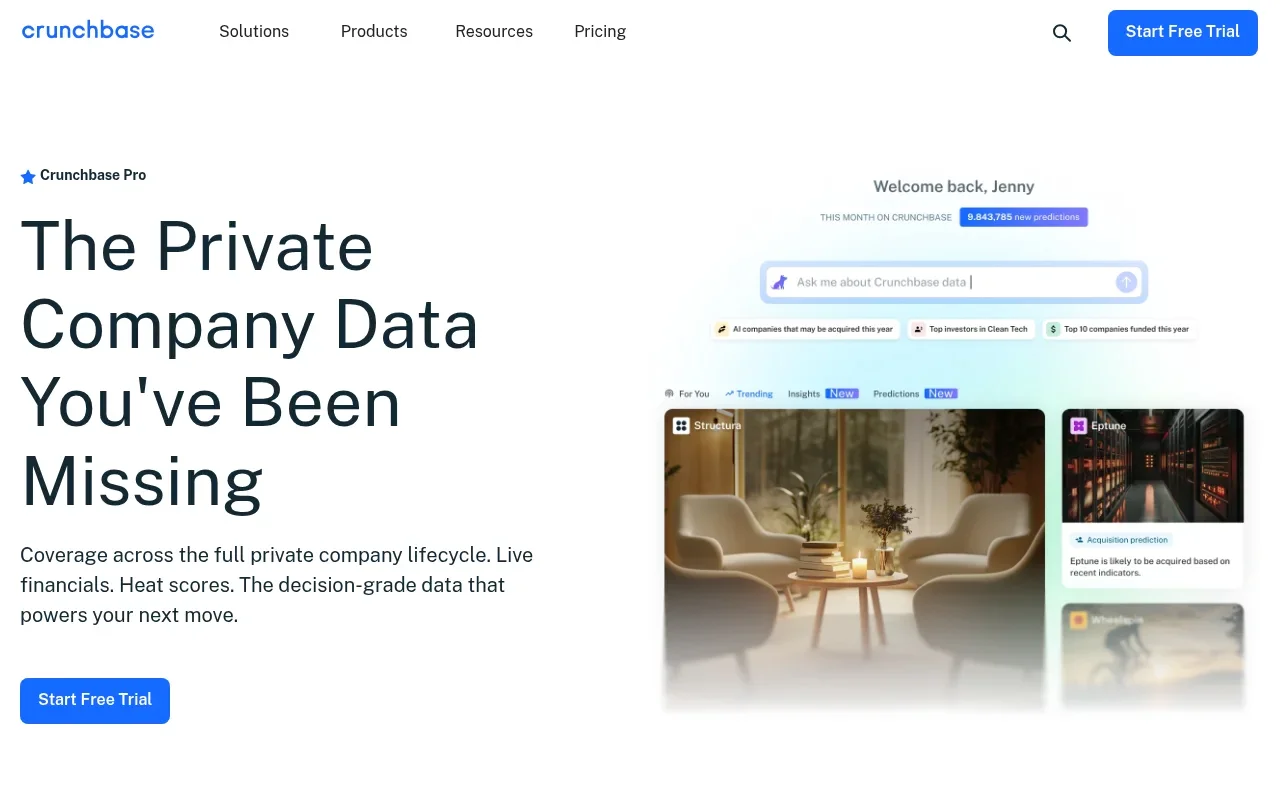
The platform maps the wider technology market well. Firm-level details are easy to find, while fund-close dates and the mandates of individual LPs need to be checked elsewhere. Crunchbase Pro is sold as an annual subscription and suits operators and investors who want a wide view of startup activity.
PitchBook: Best Institutional Private-Market Platform
PitchBook is the standard tool for institutional private-market research.
Private equity firms, investment banks, and institutional LPs use it to study companies, deals, and the movement of money through the market, including how institutions allocate to fund managers and how funds perform against each other.
It offers advanced screening across global markets, saved searches, custom alerts, and detailed fund-performance analysis. The data connects to your workflow through Excel plugins, PowerPoint extensions, CRM syncs, APIs, and direct data feeds.
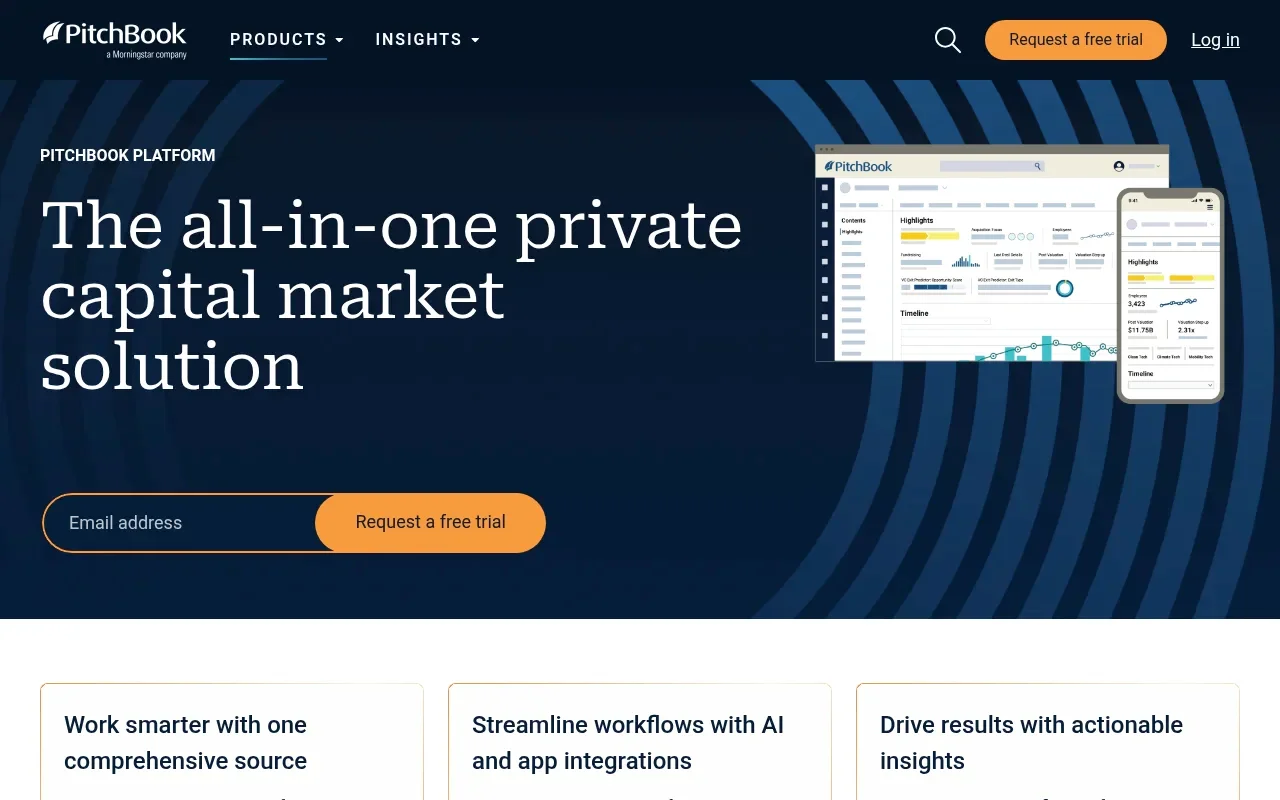
Access comes through a custom sales process with no public pricing, which puts it out of reach for most early-stage founders and small teams.
A dedicated research team, an institutional LP, or a late-stage investment firm gets the most value from it.
Best Databases for Ecosystem and Market Research
Strategic planning calls for tools that show how companies and investors connect across regions and sectors.
Dealroom: Best European Ecosystem Research Tool
Dealroom focuses on European startup ecosystems and global market mapping. It sorts investors by geography, sector, technology, stage, and funding history.
The top investors dashboard lets you compare portfolio overlap, follow co-investors, and study LP activity.
Founder-facing matching tools point startups toward active regional investors, and recent updates added an investor launch-year filter and assets-under-management figures to help with fund tracking.
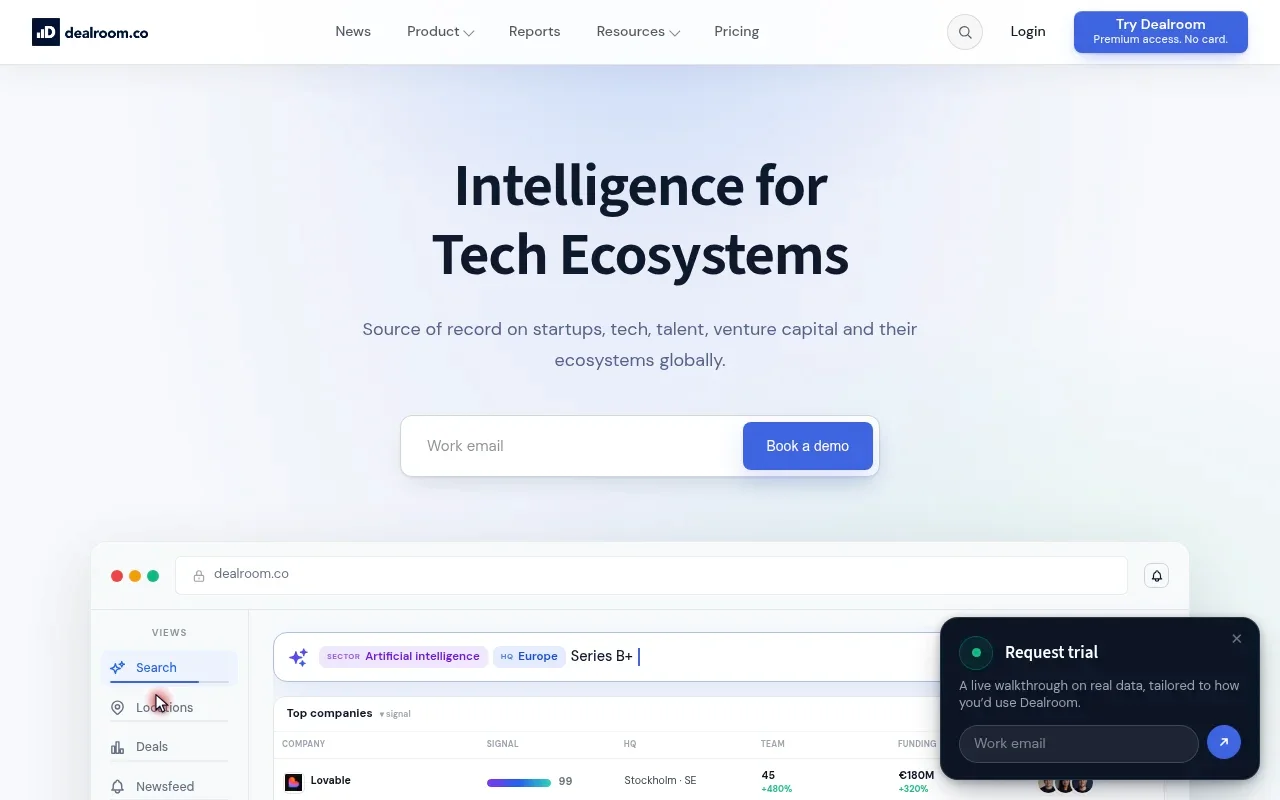
Dealroom's investor tools let you filter investors by type, HQ location, portfolio industry, investment stage, and funding-round focus, then compare them in ranking dashboards. Pricing is an annual, seat-based contract with a three-seat minimum, so it fits ecosystem analysts and regional venture funds better than individual founders.
Tracxn: Best Filter-Heavy Global Research Platform
Tracxn's Advanced Filters let you build precise searches across companies, funding activity, and investors.
The platform supports advanced AND, OR, and NOT queries in the Companies Database and other supported list pages, and you can combine geography, sector, and funding stage in a single search.
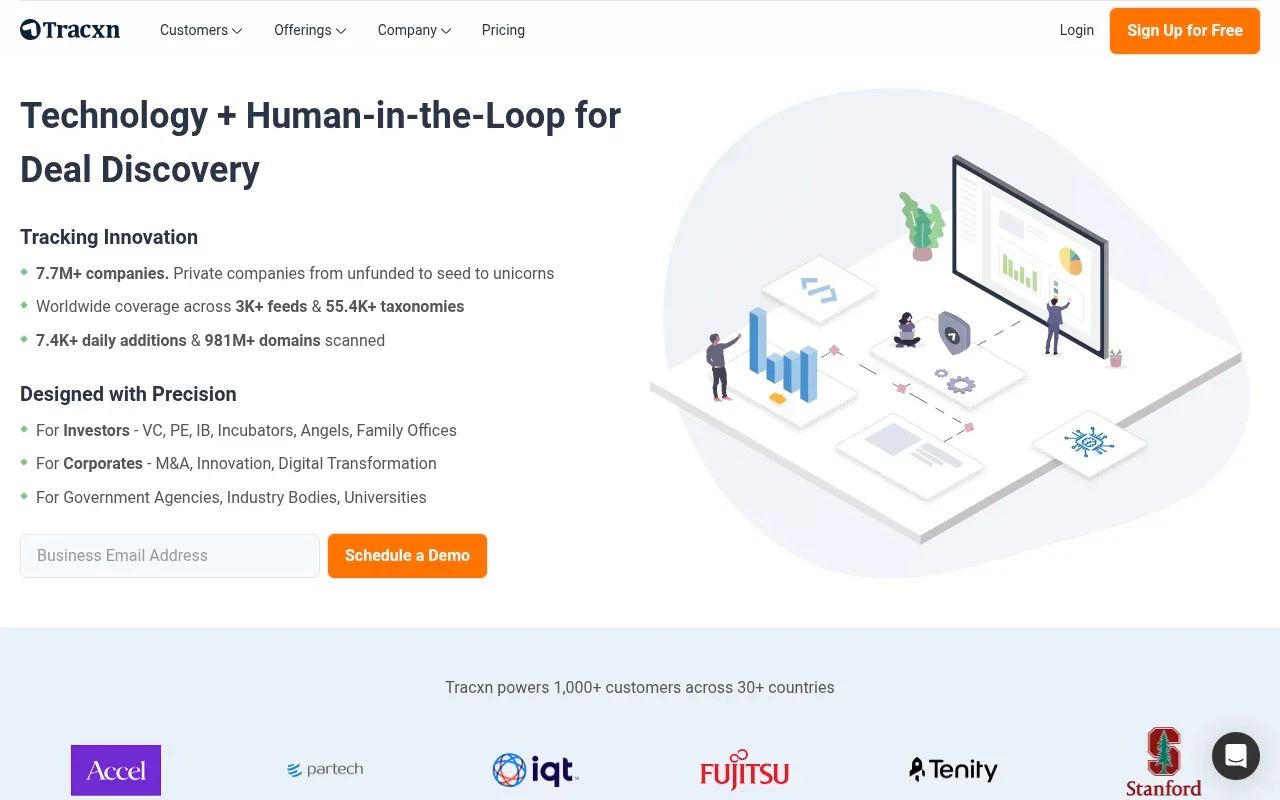
The number of taxonomy choices can overwhelm anyone who wants a short list. A founder who only needs a handful of relevant seed funds will likely find the interface too broad. Tracxn uses seat-based subscriptions with custom enterprise pricing and is built for analysts who map whole industries.
CB Insights: Best Predictive Market-Intelligence Platform
CB Insights takes a predictive approach to market research. Corporate strategy teams and late-stage investors use it to build market maps, follow technology trends, and judge how mature a company is commercially.
It gives private companies proprietary ratings, including Mosaic Scores and exit-probability ratings, and you can pull them into your own systems through an API, data feeds, and enterprise integrations.
The vendor reports more than 12 million company profiles across 1,600 markets, although the number of actively maintained records cannot be verified independently.
The platform leans toward strategy and competitive analysis more than founder-friendly investor matching, and it uses custom enterprise pricing. Strategy teams and corporate development staff looking at acquisitions get the most from it.
Best Tools for Early-Stage Discovery and Outreach
When speed and personal connections matter more than deep diligence, lighter tools give you a more direct route.
Harmonic: Best for Earliest-Stage Sourcing
Venture sourcing teams use Harmonic to find stealth companies and first-time founders. It accepts natural-language startup searches and builds network context from external connections and CRM data.
Saved searches surface talent movement, alumni networks, and early hiring signals before a startup announces a funding round, and founders can submit fundraising signals to show investors that they are actively raising.
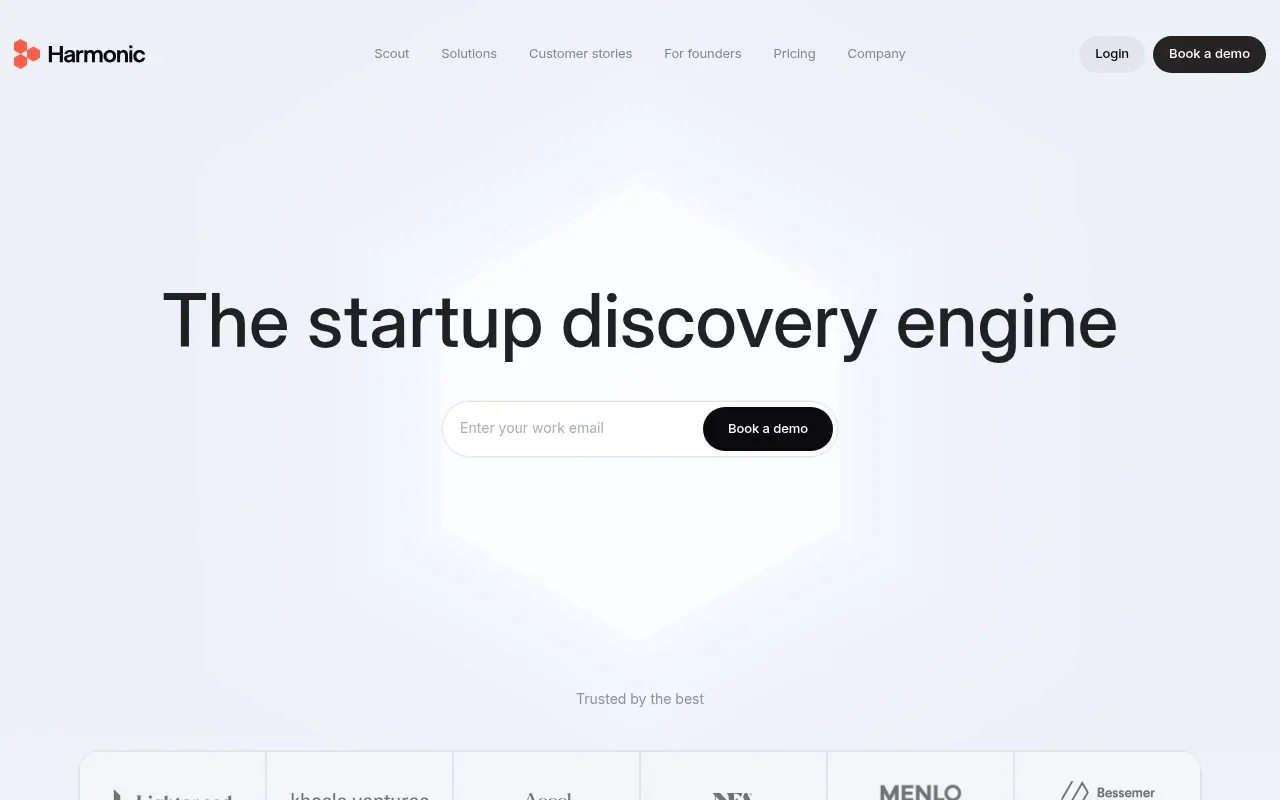
Harmonic reports more than 30 million companies and 190 million people, and its depth for emerging-manager or LP research has not been verified.
The product is built for investors who are looking for founders, so it offers little to founders who want detailed fund data. Pricing requires a conversation with the vendor, and seed and pre-seed investment associates use it to secure first meetings before a company shows up in traditional funding databases.
OpenVC: Best Low-Budget Founder Directory
Founders on a lean budget use OpenVC as a practical directory for a first round of investor research. It filters active investors by geography, target check size, stage, and industry.
Profiles show social links and reply rates calculated by the platform to help you decide whom to contact first, and a built-in fundraising CRM lets you import target lists, track conversations, and export CSV files for outreach campaigns.
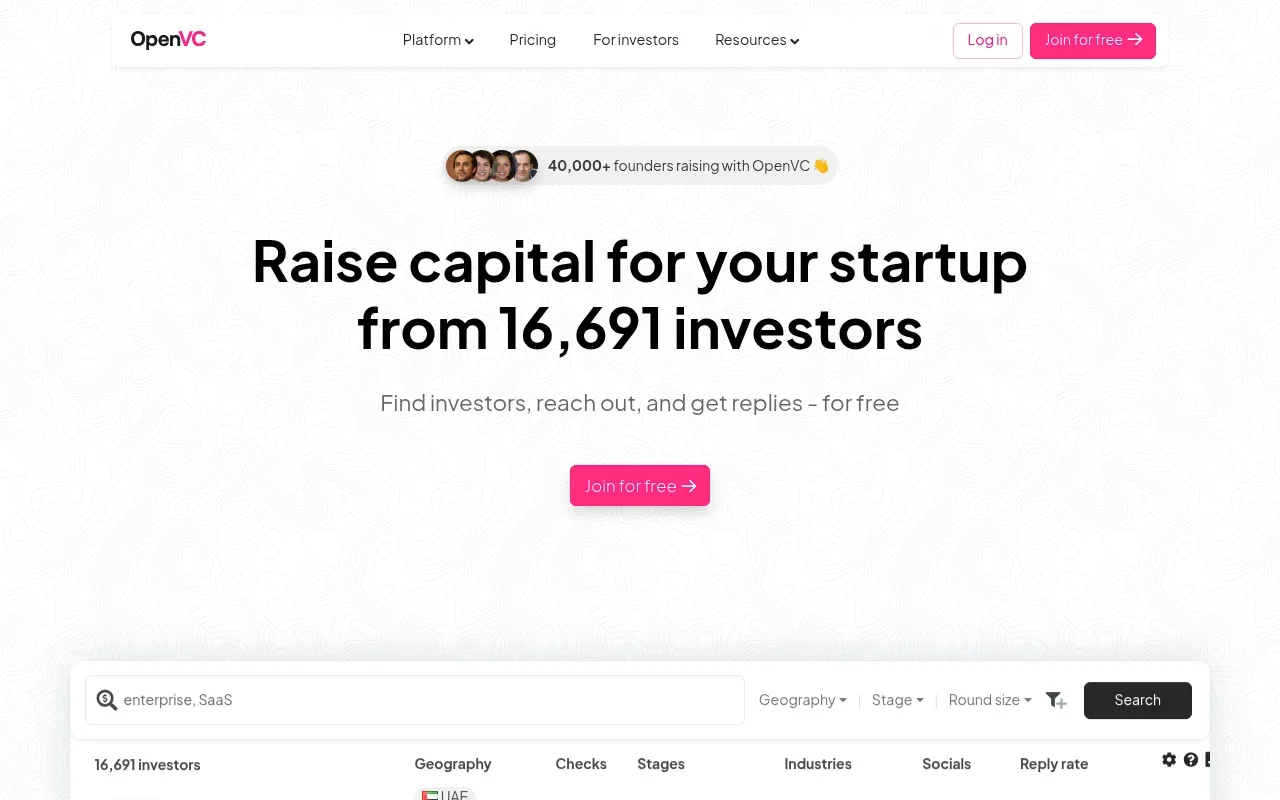
The public directory currently shows 16,700 investors and offers a free starting point with basic filtering. Check size and active-status fields are self-reported, so verify them yourself, and treat reply rates as a rough guide since they do not guarantee a response to your outreach.
The platform suits early-stage founders who want a structured workflow without enterprise software costs.
Signal by NFX: Best Free Network-Assisted Search
Signal by NFX is a free tool that helps founders find warm introduction paths. Its data comes from founders, accelerators, and venture associates who update it themselves.
You can search for investors by sector and stage, view founder introduction lists, and connect Gmail to map relationship paths. Investors are ranked by a mix of self-reported data, network connections, and community upvotes.
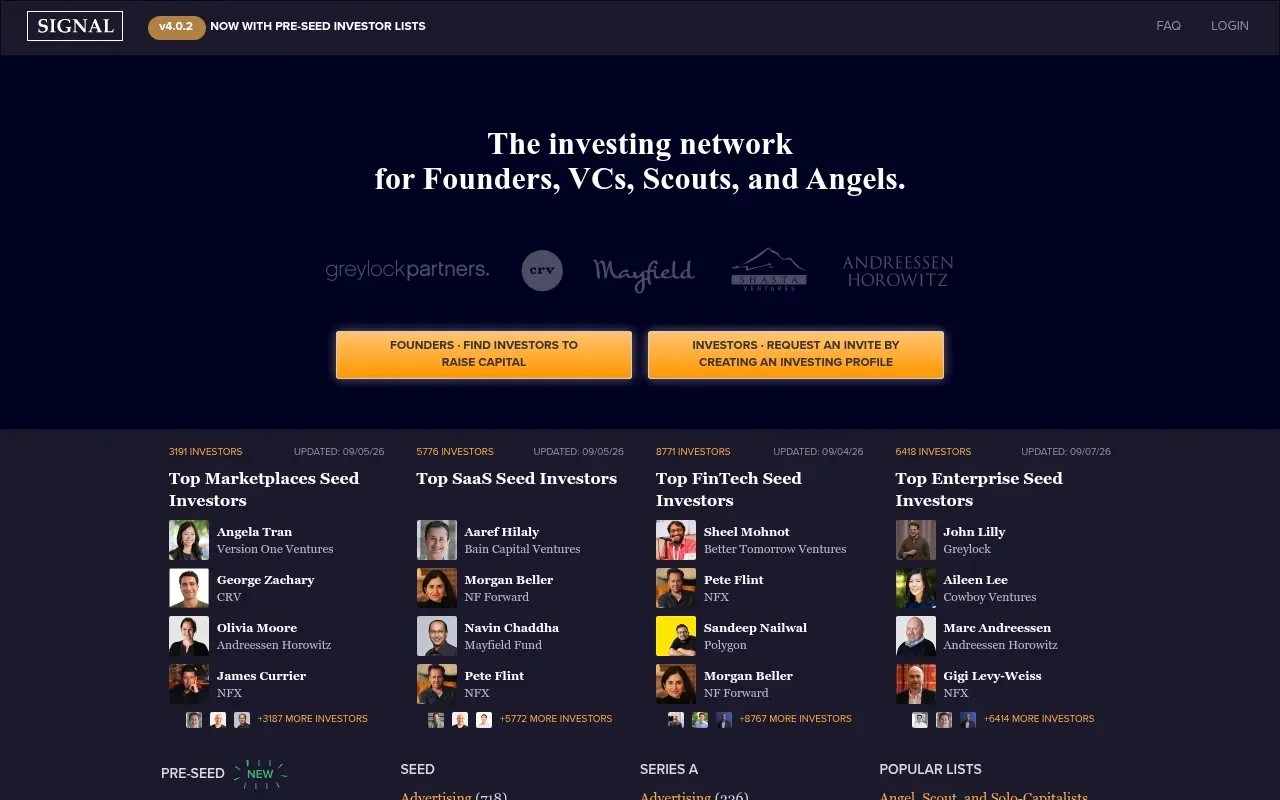
The vendor states that Signal is designed for founder outreach and does not serve investors browsing startup profiles. Because the data is community-driven, it works less well for LP diligence, fund-level analysis, or emerging-manager research.
Pre-seed and seed founders use it to map their existing networks before they turn to cold outreach.
Which Database Fits Your Role
Your main goal should decide which subscription you pick. Even the best ecosystem-mapping tool can miss what a founder needs, such as direct contact details for newly launched solo GP VC firms.
For Startup Founders
Build a lean stack that grows with your fundraising. Start with free resources such as the EverythingStartups 350-plus SaaS Investors List or Signal to get a feel for the investor landscape, then use OpenVC to find first investors and keep track of your conversations.
When your raise needs closer matching, add the New VC Funds Database to turn a large, generic list into a short list of funds filtered by focus, stage, check size, and recent activity. After that, use Crunchbase Pro or Dealroom to study comparable companies and existing portfolios. Before you reach out, check each target against its own website, current team page, and stated investment focus.
For Venture Capitalists
Investment teams need tools that show opportunities before the rest of the market sees them. Harmonic helps you find stealth and very early companies, and Crunchbase Pro, Dealroom, or Tracxn add market context, competitor portfolios, and funding history.
To keep an eye on competing funds and emerging managers, use the New VC Funds Database to see which funds launched recently in your sector. Turn to PitchBook when you need institutional fund analysis, LP benchmarking, or diligence on later-stage rounds. It also helps to keep separate fields in your CRM for past investors, funds that are currently investing, and companies that are currently raising.
For LPs and Emerging Managers
Limited partners doing manager diligence work with different data from venture capitalists sourcing startups. Start with the New VC Funds Database to find new and emerging managers by focus, stage, geography, portfolio history, and listed LP information. It also gives you a baseline for current LP requirements and fund activity.
Add Dealroom or Tracxn for regional and market context, and rely on PitchBook for institutional fund analysis and for tracking how money is allocated across managers. Treat a database profile as a first screen. Fund size, fund number, first close, final close, team continuity, and investing status are safer to confirm through primary sources, direct conversations, and regulatory filings.
Verify the Details Before You Reach Out
A subscription gives you a starting point, and the quality of your target list depends on confirming the facts before you send a message.
Confirm Current Activity
Check the current role, the current fund, and whether the firm is actively investing. A fund announcement, a first close, a final close, and active investing are four separate milestones, and none of them proves on its own that a firm is writing new checks.
The firm's official website, current team page, recent portfolio announcements, and SEC Form D filings help you confirm what a database says. Contact details are a starting lead that still needs checking, and a high reply rate listed on a platform does not guarantee an answer to your message.
Combine Tools That Cover Different Gaps
A company database, an investor directory, a new-fund tracker, a relationship map, and an institutional research suite each solve a different problem, so the right stack depends on your gaps.
Before you commit, compare seat minimums, monthly versus annual billing, and sales-led pricing, and confirm that the exports, alerts, API access, and CRM integrations you rely on are supported.
It All Depends on...
If your goal is to find investors who have just raised money, the EverythingStartups New VC Funds Database is built for that job.
You can filter new funds by focus, region, stage, and check size, and members can see the thesis, team, LP information, and contact details behind each one.
For company data, market maps, or institutional research, pair it with one of the other tools above based on your budget and role.


.png)