You can build your own free venture capital database in an afternoon using free investor directories, SEC filings and fund announcements. This guide covers the five steps, the sources to pull from at each one, and the columns to track so the list stays useful for your whole raise.
PitchBook is the best-known paid option. It does not publish prices, it sells through a sales demo, and it is built for investment banks, private equity firms and large institutional investors. Most early-stage founders need something much smaller, which is a short list of funds that invest at their stage and have fresh capital to put to work.
If you would rather compare tools side by side, including the paid ones, read our guide to the best venture capital databases in 2026.
Where the Free Data Comes From
These are the eight free sources this guide uses, and what each one is good for.
| Source | What Is Free | Use It For |
|---|---|---|
| EverythingStartups | Preview of the newest VC funds and a weekly newsletter | Finding funds that just raised new capital |
| Visible Connect | Investor search with stage, sector and check-size filters | Widening your list by stage and sector |
| VC Sheet | Fund directory, themed lists and deck matching | Browsing funds by theme, such as seed leads |
| Foundersuite | Basic plan with an investor database and a small pipeline | Adding angels and family offices |
| SEC EDGAR | Every Form D filing | Checking when a US fund started raising |
| Investment Adviser Public Disclosure | Form ADV for registered and exempt advisers | Seeing which funds a firm manages |
| Firm websites, LinkedIn and X | Fund announcements and partner posts | Seeing what a partner is backing this quarter |
| News coverage | Reports on larger fund closes | Spotting funds raised in the last few months |
What a Free Venture Capital Database Can and Cannot Tell You
Free tools are reliable for firm names, investment focus, the stages a firm backs and rough check sizes. Some of them also let you track your outreach.
They are weaker on the details that decide whether a pitch is worth sending. That includes when a fund closed, how much capital it has left, which partner covers your sector and how to reach that person directly. The method below fills those gaps by pairing the free directories with public filings and the firm's own announcements.
How to Build Your Free VC Database in 5 Steps
Each step below names the free source to use and what to take from it. A founder raising a $2 million seed round for a fintech product in Europe is used as the running example.
Step 1: Write Down Your Filters
Before you open any tool, write down four things: your stage, your round size, your sector and your geography. Every fund you add later has to match all four, which keeps the list short enough to research properly.
The founder in our example would write down seed stage, a $2 million round, fintech and Europe.
Step 2: Start With Funds That Just Raised
A fund that announced new capital in the last few months has money to invest, so these funds belong at the top of your list.
The EverythingStartups New VC Funds Database tracks venture capital funds soon after they are announced and adds new ones every week. The preview of the latest funds is free, and the free newsletter sends new funds to your inbox every Friday. You can also browse new funds by sector, including AI, fintech, deeptech, healthtech, defense tech and climate tech.
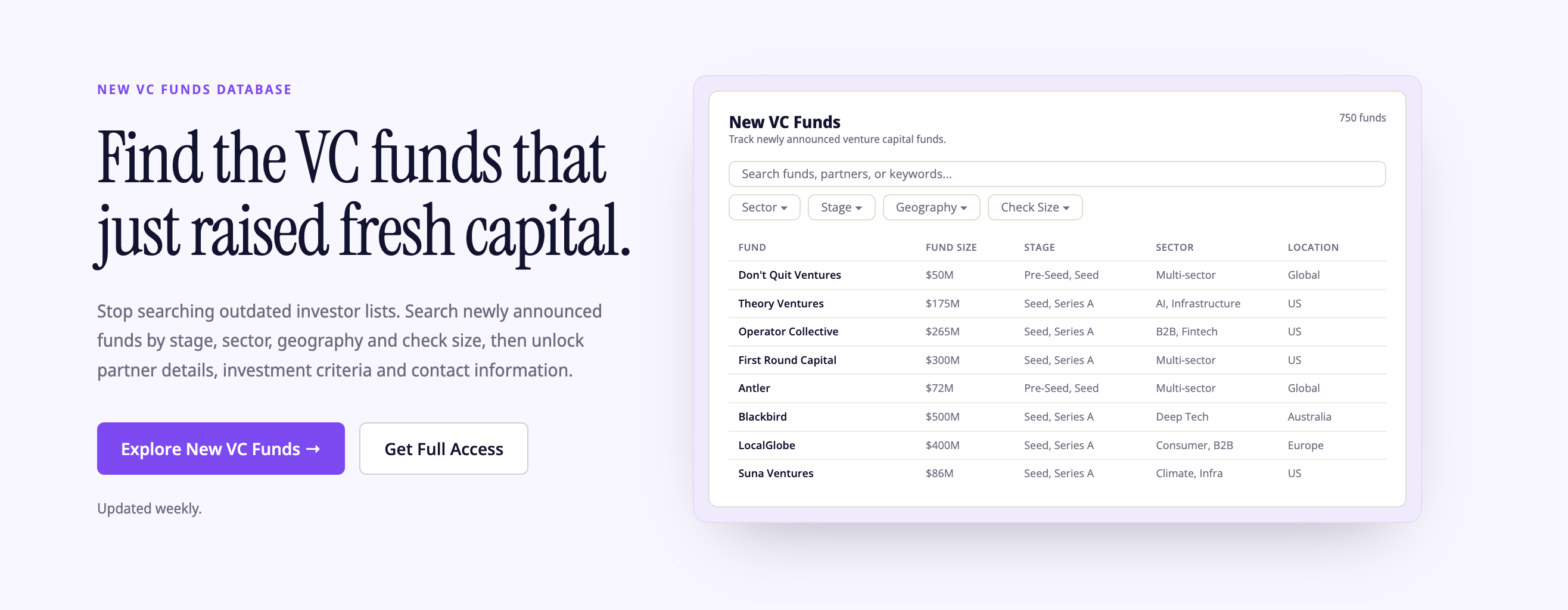
Full fund profiles with the thesis, team, portfolio, disclosed LP details and partner contacts are part of All Access, which costs $19.99 a month or $168 a year.
The founder in our example would open the fintech page and add every new fund that invests at seed in Europe.
Step 3: Widen the List With Free Investor Directories
New funds will not cover every investor who fits, so add established firms from three free directories.
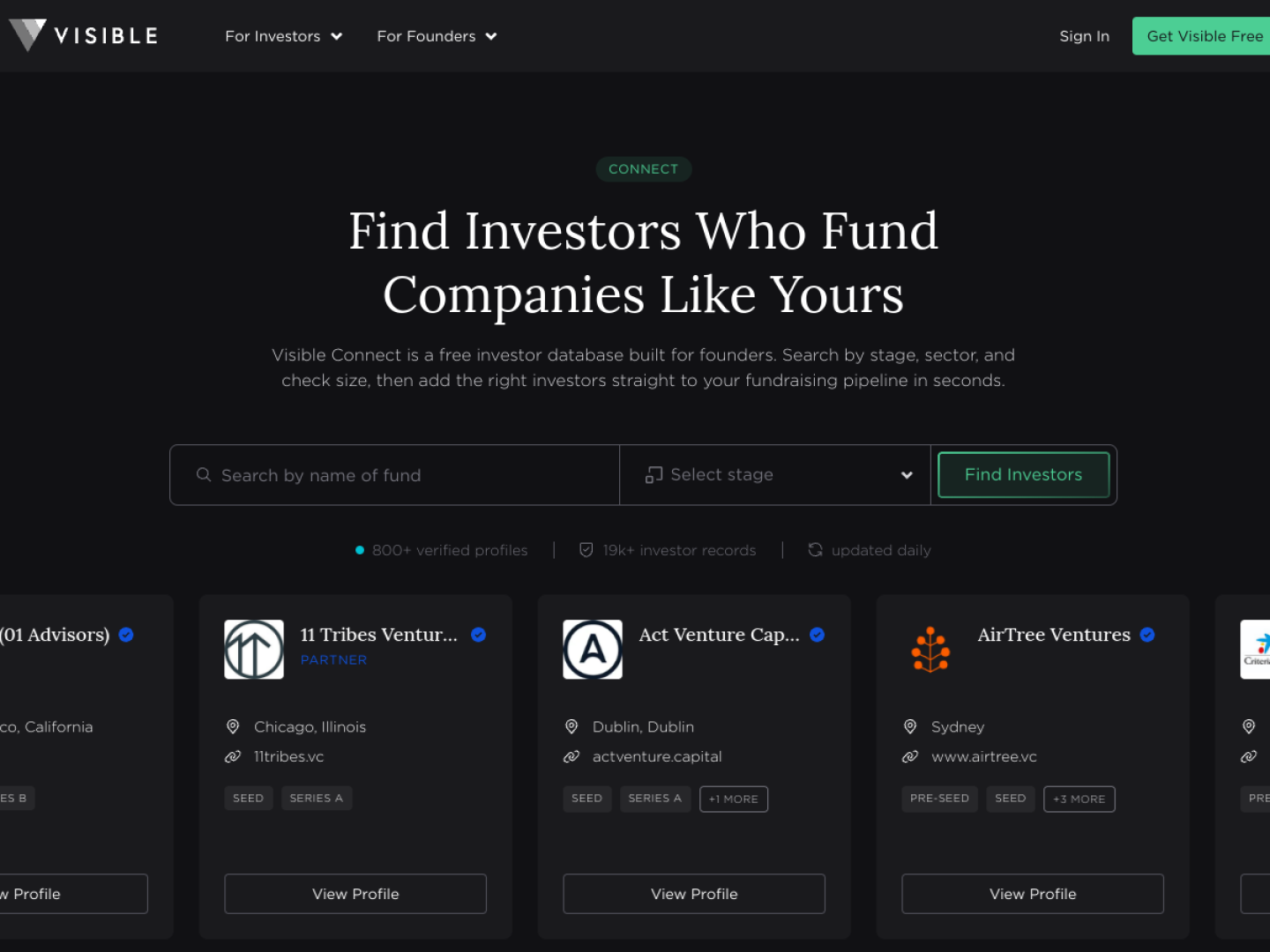
Visible Connect is a free investor database from Visible, a company that makes investor-update and fundraising software. It has more than 19,000 investor records with filters for stage, sector, check size and focus, and you can add investors to a fundraising pipeline with a free account. It does not list investor email addresses, so you will need to find contacts or warm introductions yourself.
VC Sheet is a free directory of more than 1,000 VC funds and 5,000 investors. It groups funds into themed sheets such as seed leads, sector specialists and funds backing women founders, and its profiles include notable investments and pitch preferences. You can also upload your deck to get suggested investors. It focuses on well-known funds, so you will find fewer first-time funds there.

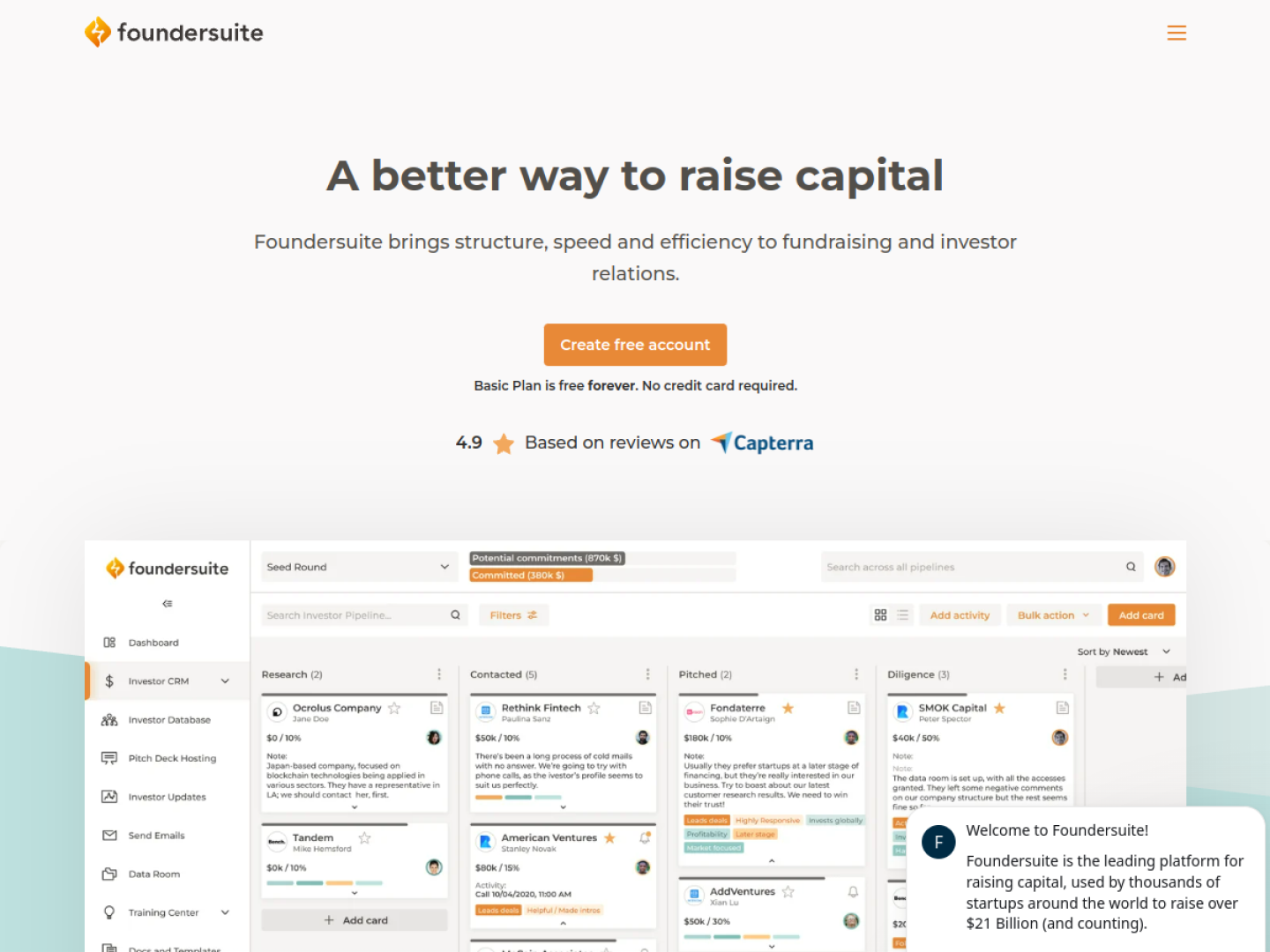
Foundersuite is a fundraising CRM with a database it says covers about 216,000 investors, including VC firms, family offices, angel groups and accelerators. The free Basic plan includes database access and a pipeline for a limited number of investors, and paid plans start at $745 a year. The pipeline limit has changed over time, so check the pricing page before you rely on it.
The founder in our example would filter Visible Connect by seed and fintech, then check the VC Sheet list of seed leads for firms that invest in Europe.
Step 4: Confirm Each Fund Is Active
A directory listing does not prove a firm is still writing checks, so verify each fund against sources the firm cannot leave out of date.
- The firm's own website and blog. Firms announce new funds on their own channels, and a recent announcement is the clearest sign of fresh capital.
- SEC Form D on EDGAR. US funds raising under Regulation D must file a Form D within 15 calendar days of their first sale, according to the SEC. Search the fund's name on SEC EDGAR to see when it started raising. A recent filing suggests the fund is raising or investing, although it does not confirm a final close.
- Investment Adviser Public Disclosure. Most US venture firms register as investment advisers or file as exempt reporting advisers. Search the firm on the SEC's Investment Adviser Public Disclosure site and open its Form ADV to see the private funds it manages.
- LinkedIn and X. Partners post about the deals they do, so following the partners at your target firms shows you what they are investing in this quarter.
- News coverage. Tech and finance outlets report on larger fund closes. Searching "new fund" plus your sector or city turns up firms that raised in the past few months.
For a deeper checklist, read our guide on how to research VC funds before you pitch.
Step 5: Record Everything in One Sheet
Put every fund into a single spreadsheet with these six columns. This sheet is your free venture capital database, and it will be more accurate for your raise than a general directory because every row has been checked against your filters.
| Column | What to Record |
|---|---|
| Firm and fund | Firm name plus the specific fund, such as Fund III |
| Fund size and date | Amount raised and when it was announced |
| Stage and check size | The stages it backs and its typical check |
| Partner | The person who covers your sector |
| Route in | Warm intro, deck form or direct email |
| Source and date checked | Where you confirmed the details and when |
Fund details change over a long raise, and a date next to each row tells you which ones need a second look before you send a pitch.
When a Paid Venture Capital Database Is Worth It
The free method works, and its cost is time, because you check several sites by hand for every firm on your list.
Paying makes sense in three situations: you need direct partner contacts for dozens of funds, you want new funds in your sector every week without searching for them, or you are raising a larger round with a longer list of investors to cover. For most early-stage founders, a low-cost database focused on new funds closes that gap for far less than PitchBook.
If you want a head start on your list, see our roundup of the top early-stage VC firms and the 2026 VC funds report, which covers the largest new funds by sector and region.
Frequently Asked Questions
Is there a completely free venture capital database?
Yes. VC Sheet and Visible Connect are free, Foundersuite has a free Basic plan, and EverythingStartups offers a free preview of the newest funds along with a free weekly newsletter.
How can I find VC firms that are actively investing for free?
Start with funds that recently announced new capital, then confirm each one through the firm's own announcement and a recent Form D filing on SEC EDGAR.
Do free VC databases include investor email addresses?
Usually not. Visible Connect does not list investor emails, and most free directories point you to a deck form or leave you to find a warm introduction. Direct partner contacts tend to sit behind paid plans.
Is PitchBook free for founders?
No. PitchBook has no free plan and sells through a sales demo. Some universities and accelerators give their members access.
Can I see a VC fund's size for free?
Often, yes. Firms usually announce fund sizes publicly, and US funds report their offering amounts on Form D, which you can search for free on SEC EDGAR.
Get New VC Funds Every Week for Free
The fastest free way to keep your list current is to follow the funds that just raised. Browse the EverythingStartups New VC Funds Database to see the latest ones, and join the weekly newsletter to get new VC funds in your inbox every Friday.