Finding the right startup database means deciding what data answers your immediate question. A broad company database tells you who raised money three years ago, while a specialized tracker tells you who is writing checks today. Searching for a Crunchbase alternative usually means you have hit the limit of general company data and need a tool built for a narrower task. That might involve discovering emerging managers, mapping a regional ecosystem, screening specific business models, or running detailed institutional fund analysis.
Your workflow dictates the tool. If you need a comprehensive map of private companies, a broad intelligence platform remains the baseline. When your priority shifts to uncovering new venture capital funds, screening limited partners, or finding investors who match your exact check size, a specialized discovery tool replaces the general search process.
Before looking at features, compare the five platforms on the criteria that decide research fit in 2026.
Crunchbase Alternatives Compared
| Platform | Best For | Fund & LP Data | Investor Filters | Pricing | Main Limitation |
|---|---|---|---|---|---|
| EverythingStartups | New VC funds and emerging managers | Primary focus | Stage, focus, region, check size | $19.99/month or $168/year | Not a full company database |
| Dealroom | Ecosystem mapping | Corporate and angel investors | Geography, founder matching | From €12,600/year (3 seats) | High annual minimums |
| PitchBook | Institutional research | LP and GP allocation data | Fund performance, dry powder | Custom, via demo | More depth than founders need |
| Tracxn | Thematic screening | Emerging markets coverage | Sector and business model | Free Lite tier, custom plans | Complex taxonomy |
| Crunchbase | Broad company lookup | General investor records | Stage, location, recent activity | Free tier, paid Pro and Business | Little specialized LP data |
Prices change often, so check each pricing page before you commit.
1. EverythingStartups: Discovering New VC Funds
Founders and venture capitalists often spend hours filtering huge company directories to find investors with money to deploy. EverythingStartups approaches the problem from the other side. Instead of trying to index every private business, the New VC Funds Database tracks newly launched funds, emerging managers and early-stage capital as it is raised.
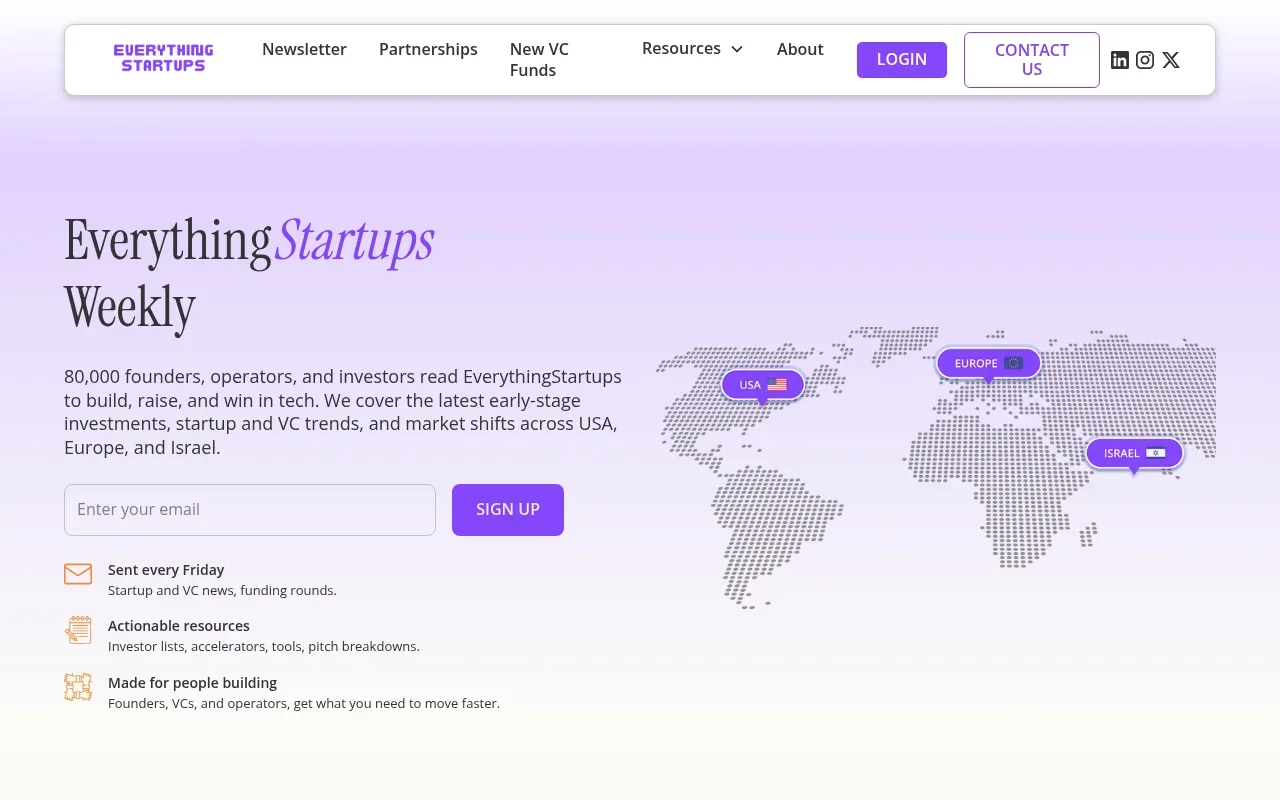
The database puts fund and LP data first, so you can filter investors by investment focus, region, stage and check size. Founders use it to build an outreach list of firms that are raising and deploying capital now, instead of firms that backed a competitor five years ago. Investors get an early read on emerging managers before those firms show up in standard directories.
New funds are added every week, and the free EverythingStartups newsletter sends the latest ones to your inbox every Friday. Paying members see the full fund profile, including the investment team, LP information, portfolio history and partner contact details, and can save funds to a shortlist.
A preview of the newest funds is free on the New VC Funds page. Full access is included in All Access at $19.99 per month or $168 per year.
The main trade-off is scope. EverythingStartups does not replace a full company database or an institutional valuation tool. You use it to find the right fund, then confirm the mandate on the firm's own website.
2. Dealroom: Mapping Regional Ecosystems
European and global tech ecosystem research needs a platform that tracks regional detail. Dealroom fills this gap by focusing on high-growth companies, venture capital activity and local technology hubs.
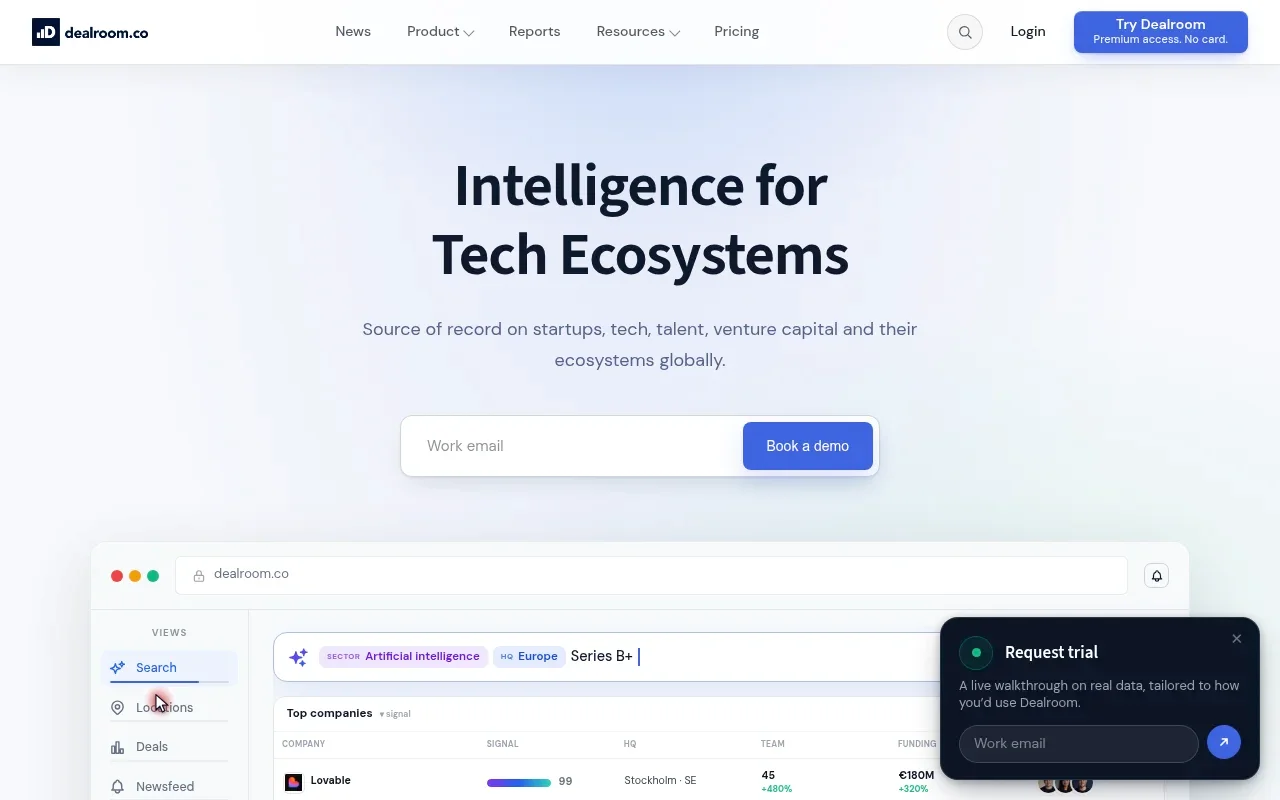
Dealroom is built around company and funding data. It tracks startups alongside corporate investors and angel syndicates, and offers a founder-matching tool that pairs entrepreneurs with potential backers. Investor filters cover geography, industry and funding stage, which makes the database effective for mapping a specific city's tech scene.
Exports and API access serve research teams and government agencies tracking innovation metrics. Alerts track funding rounds, ecosystem events and notable exits within your chosen parameters.
The published pricing page lists Premium access at €12,600 per year and Premium Plus at €17,000 per year, both with a three-seat minimum. A three-day Premium trial includes 50 export credits.
That seat minimum is the main limitation. A solo founder or emerging manager who needs one investor list for one round will find a three-license annual contract hard to justify. Dealroom works better as an ongoing research tool for teams monitoring ecosystems.
3. PitchBook: Analyzing Institutional Private-Market Data
Institutional venture firms, private equity groups and large limited partners work to a different diligence standard. PitchBook serves this audience with detailed private-market analysis.
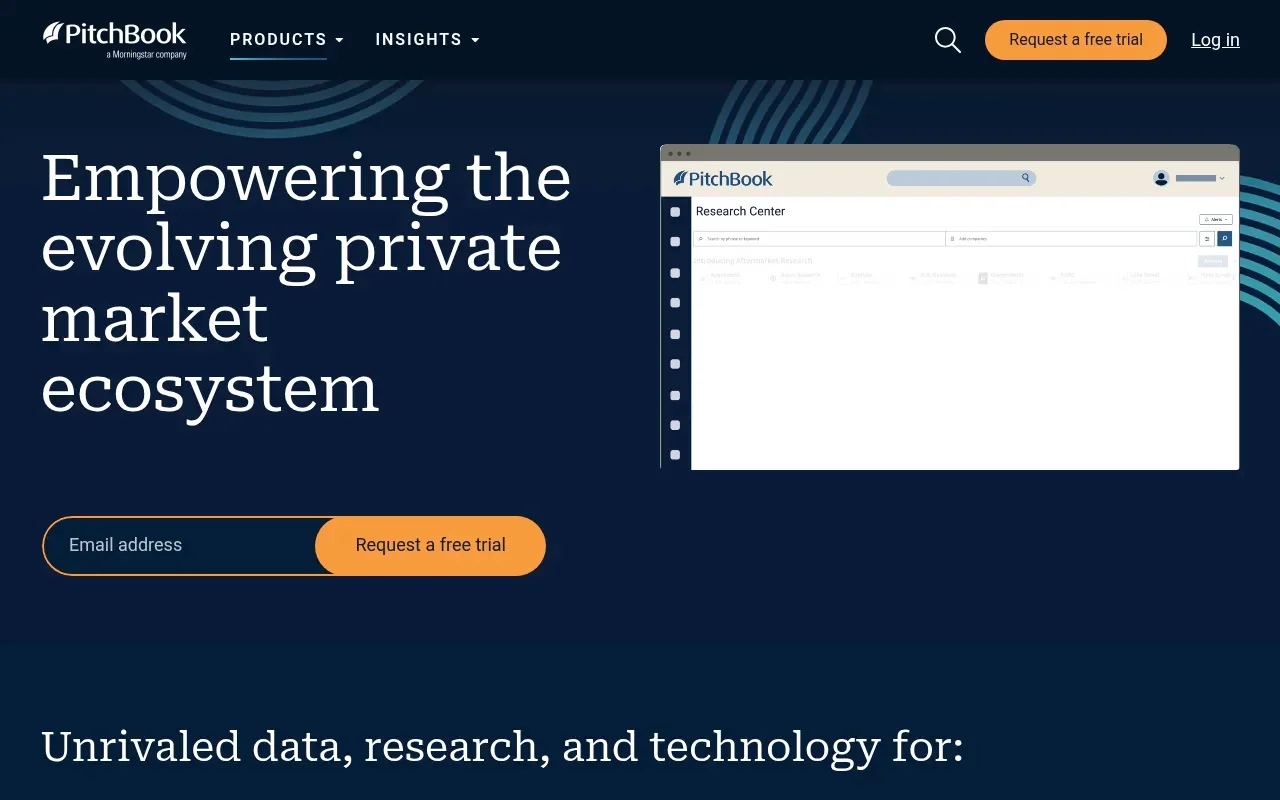
PitchBook maps fund, deal, company and people data in depth. A founder needs to know whether an investor writes seed checks, while a PitchBook user needs to analyze a fund's historical performance, benchmark it against peers and review LP and GP allocations. The filters reflect this, letting you screen by investment multiple, dry powder and deployment pace.
API integrations plug into institutional workflows for financial modeling and portfolio tracking, and alerts cover deal terms, management changes and shifts in capital structure.
PitchBook does not publish a standard price. Buyers go through a demo and trial request, which leads to a custom enterprise contract based on data needs and seat count.
The caveat is fit. PitchBook is an expensive choice for a seed-stage founder trying to find fifty relevant VCs. It works best for teams doing formal fund analysis, benchmarking and private-market diligence.
4. Tracxn: Screening Specific Business Models
Market researchers and corporate development teams often need to filter startups by business model or emerging technology. Tracxn is built around these detailed categories.
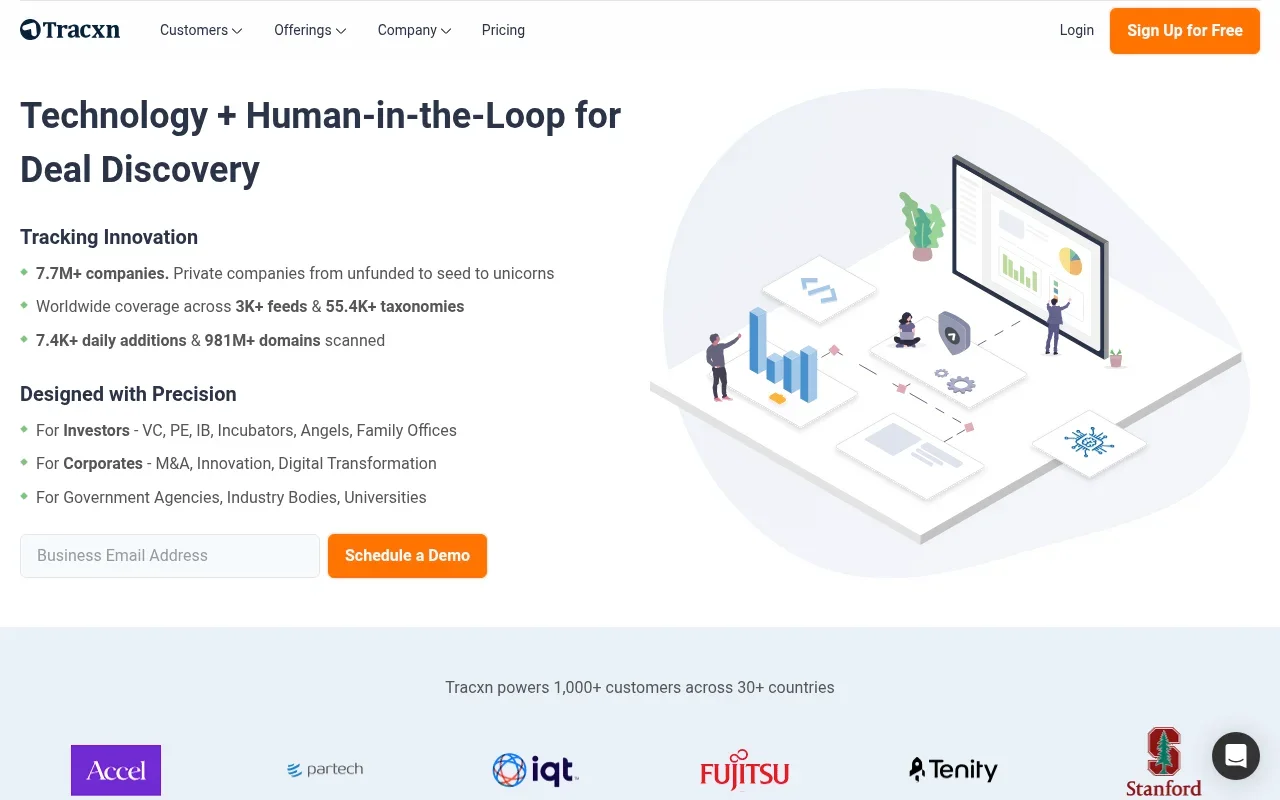
The platform sorts companies, funding rounds and acquisitions into specific sectors and themes, so you can screen for startups in niche markets that broader databases group under generic labels. Investor filters show who is funding those exact business models, backed by live deal tracking and sector reports.
Commercial plans include CRM integrations, API endpoints and data dumps for research teams building internal dashboards. Alerts trigger when companies in a tracked category raise money, launch products or get acquired.
Tracxn Lite is a free tier with no credit card required, though usage limits apply. Exports and CRM tools need a paid plan, outlined on the pricing page.
The limitation is complexity. A founder looking for active pre-seed investors in London will find the category system more involved than a targeted discovery tool.
5. Crunchbase: The Broad Company Baseline
Any comparison needs a baseline, and Crunchbase remains the default platform for broad private-company lookup and general market monitoring.
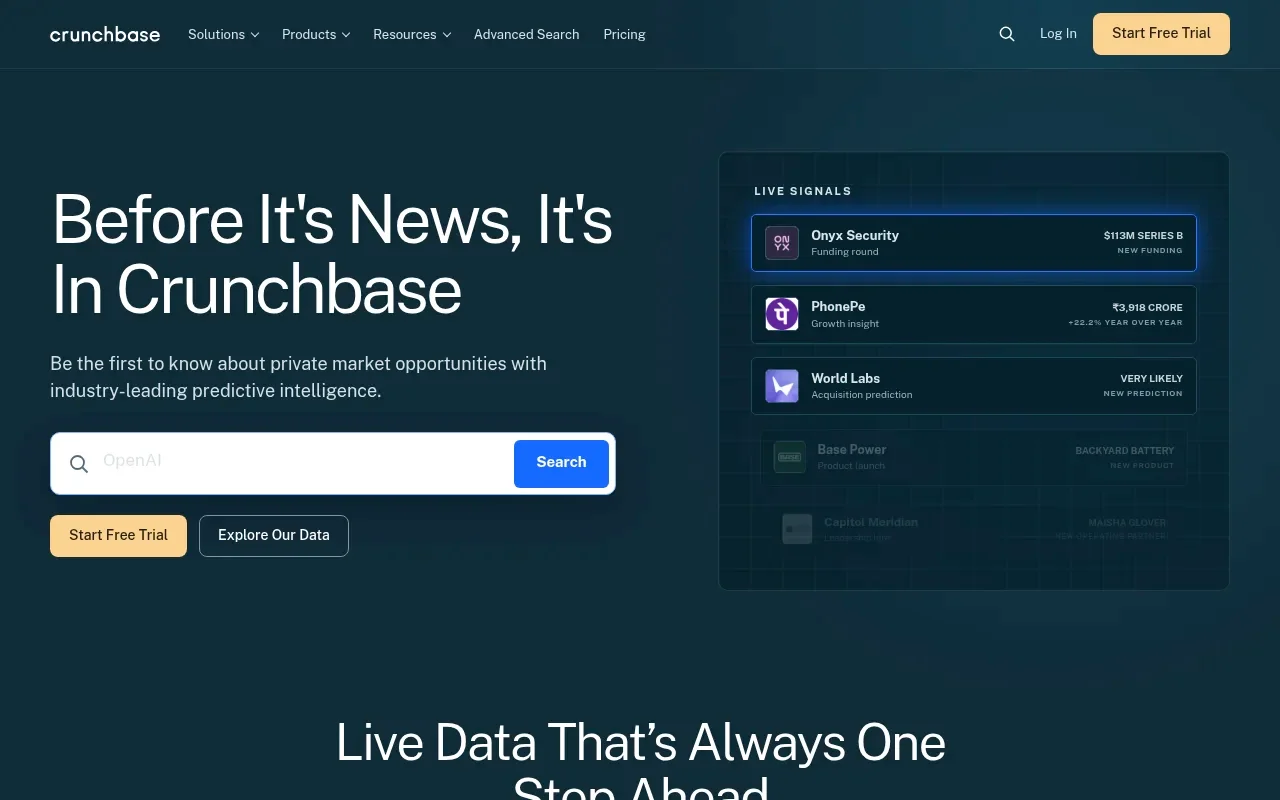
The database covers more than four million private companies with funding histories, growth scores and company insights. It tracks investors and fund announcements, but the company record is the center of everything. Investor filters cover stage, location and recent activity, without the thesis and check-size detail of a dedicated fund tracker.
Exports scale with your plan. Pro users can export up to 2,000 rows a month, and Business users get 5,000 rows plus Salesforce and HubSpot integrations and acquisition and IPO predictions. Alerts cover funding events, leadership changes and media mentions for your saved lists.
Free accounts return up to five results per search, according to a comparison of Crunchbase's free and paid tiers.
Crunchbase wins on volume and breadth. Its limits show when you need LP data, emerging manager discovery or early-stage capital context, because those records get buried under general company updates.
How to Choose a Crunchbase Alternative
The right platform depends on the job you need it to do. Test each option against a specific, repeatable set of questions instead of relying on the vendor's accuracy claims.
Pick twenty target companies across the US, Europe and Israel, plus ten venture funds with known recent activity. Run them through each database and check whether you can filter by exact stage, sector and check size. See whether portfolio histories are complete, how exports handle duplicates, and whether the license allows the API or CRM use you need. Our guide to the best startup and VC databases covers more tools if none of these five fit.
Best-Fit Stacks by Role
Different roles need different data, and you rarely need one tool to do everything.
- Founders: start with fund discovery. Use the New VC Funds Database to find emerging managers by stage, region and check size, then confirm each mandate on the fund's website. Add Crunchbase Free or Dealroom if you need history on a competitor's round. Our list of startup tools for fundraising covers the rest of the stack, from deck sharing to cap tables.
- Emerging VCs: pair an early-stage tracker with a CRM. Follow new fund launches through EverythingStartups, then use Tracxn to screen technology sectors before logging targets in your deal flow system.
- Institutional VCs and LPs: combine PitchBook's private-market analysis with a new-fund tracker. Use the tracker to surface new managers, then move to PitchBook and the GP's own documents for allocation diligence.
- Market researchers: choose Crunchbase for volume, Dealroom for geographic mapping or Tracxn for categories, depending on what your reports need.
If you are building an outreach list, the curated EverythingStartups lists include nearly 300 limited partners and more than 120 early-stage investors. Founders raising a first round can also start with our list of top early-stage VC firms.
Frequently Asked Questions
What is the best overall Crunchbase alternative?
It depends on your workflow. Dealroom suits ecosystem mapping, PitchBook handles institutional research, Tracxn covers thematic screening, and EverythingStartups tracks new funds and early-stage capital.
What is the best free Crunchbase alternative?
Crunchbase's own free tier returns five results per search, Dealroom offers limited public access to fund and angel data, and Tracxn Lite allows restricted startup screening. For newly announced funds, the EverythingStartups New VC Funds page shows the latest funds for free and updates weekly.
What is the best option for startup founders?
Founders need investors who are actively writing checks at their stage. A fund database that filters by focus, region and check size produces a cleaner outreach list than a broad company directory.
What is the best option for venture capitalists?
To source companies, use Tracxn or Dealroom. To research emerging managers or track competing fund launches, use a new-fund tracker like EverythingStartups.
What is the best tool for LPs researching emerging managers?
EverythingStartups helps LPs find new funds and emerging managers early. PitchBook provides the historical performance and benchmarking data for the diligence that follows.
Does Crunchbase have an API?
Yes. The API requires an Enterprise or Applications license, provides read-only endpoints and limits usage to 200 calls per minute.
Is EverythingStartups a full Crunchbase replacement?
No. EverythingStartups specializes in new funds, emerging managers, LPs and early-stage capital. If you need broad company histories or enterprise CRM integrations, you will still need a general database alongside it.
To find out which VC funds raised new capital this week, explore the EverythingStartups New VC Funds Database. You can read more about how we track funds on our About Us page.