A seed round usually means talking to 50 to 150 investors over a few months, and most founders still try to run that out of a spreadsheet, a Gmail inbox and a pitch deck sent as a PDF attachment. That setup breaks quickly. You lose track of who opened your deck, which partner asked for the financial model, and which fund already passed.
The startup tools in this list each handle one part of the raise: finding investors who are actively writing checks, tracking your pipeline, sharing your deck and data room securely, and keeping your cap table clean. We picked eight platforms built for founders, with pricing that makes sense for an early-stage company, and left out the enterprise suites that are priced for investment firms.
One of the tools below is the EverythingStartups New VC Funds Database, which we build ourselves. We describe it with the same pros and limits we apply to every other tool here.
Startup Tools for Fundraising Compared
| Tool | Best For | Free Option | Paid Pricing (Nov 2026) |
|---|---|---|---|
| EverythingStartups | Finding newly launched VC funds with fresh capital | Preview of the latest funds | $19.99/month or $168/year |
| Papermark | Pitch deck sharing and data rooms with page-level analytics | Yes, 50 links and 50 documents | From €24/month; data rooms from €99/month |
| OpenVC | Free investor search and deck submission | Yes, core platform is free | Optional premium upgrade |
| Slidebean | Building a pitch deck from templates | Yes, without exports or sharing | All-Access $8/month billed annually |
| FluidDocs | Interactive decks and updates that investors can ask questions | Yes, unlimited documents | Pro $10/month billed annually |
| Clerky | SAFEs and other fundraising paperwork | No | SAFEs $9 each |
| folk | A flexible CRM for founders running several pipelines | 14-day trial | From about $20/user/month |
| Cake Equity | Cap table and round modeling | Free for very small cap tables | Build plan from about $1,000/year |
Prices change often, so check each pricing page before you commit.
The 8 Best Startup Tools for Fundraising
1. EverythingStartups New VC Funds Database
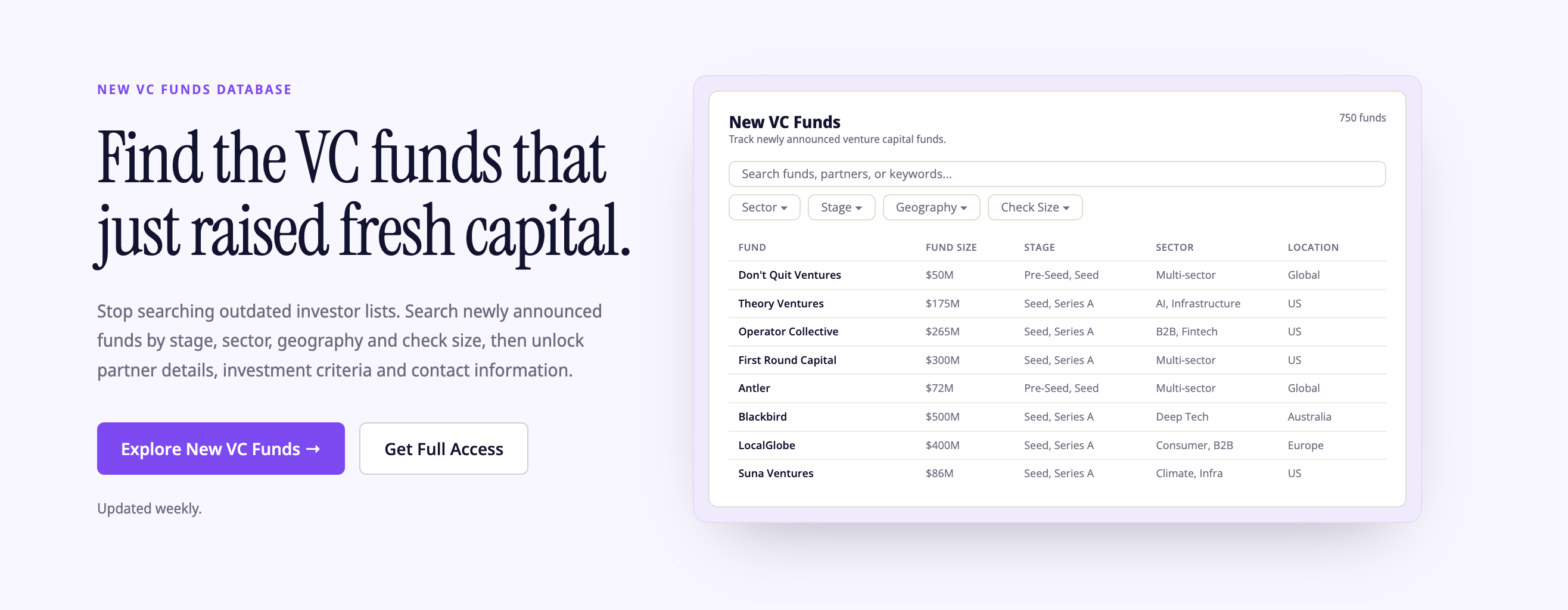
The EverythingStartups New VC Funds Database tracks only venture funds that have just been announced or closed, so every name on the list has fresh capital to deploy. New funds are added every week, and you can filter them by geography, stage, sector and fund size.
Paying members open a full profile for each fund with the investment team, LPs, LinkedIn profiles and partner emails, and can save funds to a shortlist. The free EverythingStartups newsletter also sends the latest funds to your inbox every Friday.
- Best for: founders who want to pitch funds early in their deployment cycle, when partners are actively looking for new deals.
- Pricing: $19.99/month or $168/year, with a free preview of the most recent funds.
- Limits: it covers new funds only, so it will not replace a broad directory of every investor, and it has no built-in email sending.
2. Papermark

Papermark is an open-source alternative to DocSend for sharing your pitch deck and running a data room. Every link records who viewed the document, how long they spent on each page and how far they got, which tells you which investors are worth a follow-up.
For due diligence it adds NDA gating, dynamic watermarks, screenshot protection, custom domains and granular permissions per file. Papermark says more than 70,000 companies use it, and it holds SOC 2 Type II and ISO 27001 certifications. Teams that want full control can self-host it.
- Best for: founders who want to know exactly how investors read their deck, and who need a proper data room once term sheet talks start.
- Pricing: free plan with 50 links and 50 documents; Pro is €24/month, Business €59/month and Data Rooms from €99/month (pricing).
- Limits: it does not help you find investors, and full data room features sit on the top plan.
3. OpenVC
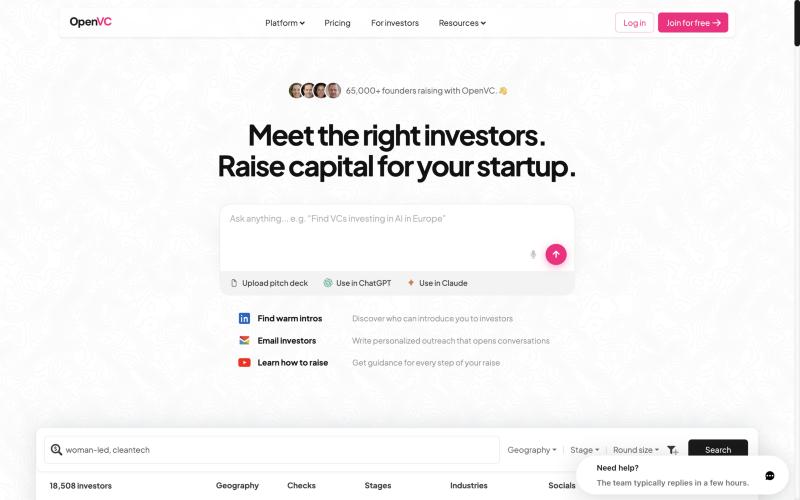
OpenVC is a free investor directory with more than 16,000 VCs and angels, plus a built-in fundraising CRM and deck analytics. Many investors on the platform accept pitches through one standard submission form, so you can send your deck without hunting for an email address.
- Best for: first-time founders building their first investor list on a zero budget.
- Pricing: free core platform, with an optional premium upgrade.
- Limits: profiles depend partly on community updates, so check each fund's website before you pitch, and response rates from form submissions can be low.
4. Slidebean

Slidebean is a pitch deck builder with more than 120 templates modeled on decks from venture-backed startups. You can generate a first draft from a short description or your website URL, and the AI handles slide layout so the deck looks consistent. Shared decks show views and time spent on each slide.
- Best for: founders who need a clean investor deck quickly and do not have a designer.
- Pricing: free plan for building decks; All-Access costs $8/month billed annually ($96/year) and adds exports, sharing and analytics. Higher tiers with deck writing and financial modeling help are priced on request.
- Limits: PowerPoint exports can swap fonts and turn charts into images, so finish the deck inside Slidebean.
5. FluidDocs

FluidDocs turns your pitch deck, memo or investor update into an interactive document that investors can ask questions. Answers come from the document itself and are written in your voice, so a partner reading your deck at 11pm can ask about your moat or revenue model and get a real answer. You can upload an existing PDF or deck, and FluidDocs has ready-made investor deck and investor update templates.
On your side, you see who opened the document, how long they spent on each page, where they dropped off and every question they asked. Those questions tell you what to address before the next call. FluidDocs says more than 10,000 documents are already live on the platform.
- Best for: founders who want to know what investors are actually curious about, and who want their deck to keep answering questions after the meeting ends.
- Pricing: free plan with unlimited documents and 10,000 AI credits a month; Pro costs $10/month billed annually ($15 monthly) and adds viewer identity, email gating and real-time open alerts.
- Limits: on the free plan readers are anonymous, so you need Pro to see which investor asked which question.
6. Clerky

Clerky handles the legal paperwork around a raise for US startup corporations: SAFEs, stock issuances, stock plans, board consents and 83(b) elections. The documents are standardized so they hold up when investors review them during diligence.
- Best for: founders raising on SAFEs who want clean paperwork without paying hourly legal fees for every document.
- Pricing: SAFEs cost $9 each and stock issuances $29 each; incorporation is $427 one-time, and the Company Lifetime Package is $819 one-time.
- Limits: it covers standard documents, so a priced round with negotiated terms still needs a startup lawyer.
7. folk
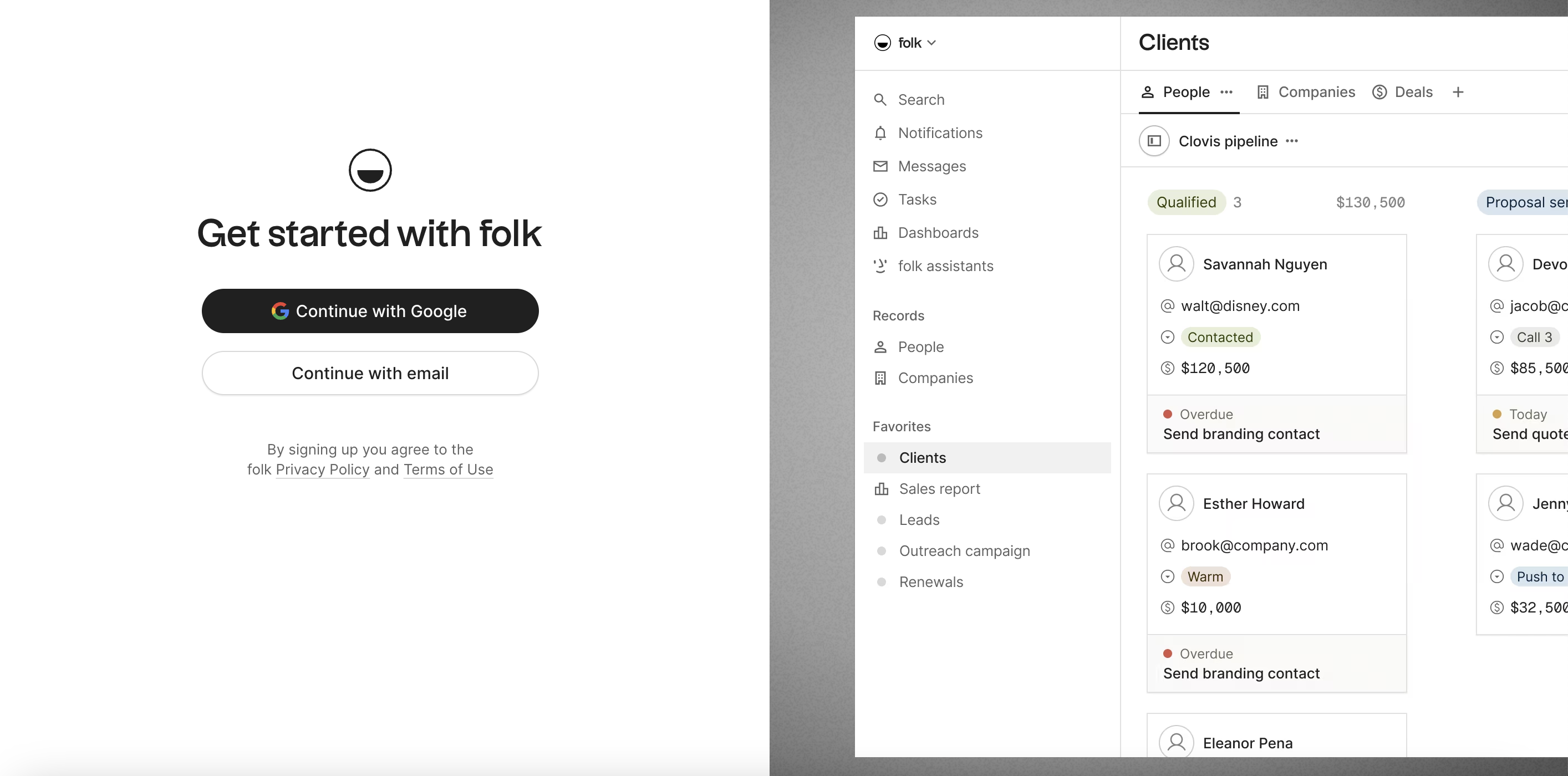
folk is a lightweight CRM that lets you run an investor pipeline next to your sales, hiring and partnership pipelines, all on one shared contact list. Its Chrome extension imports investor profiles from LinkedIn in one click, and you can send personalized email sequences from Gmail or Outlook.
- Best for: small founding teams who want one clean CRM for everything, including fundraising.
- Pricing: from about $20 per user per month, with a 14-day trial.
- Limits: it has no investor database, so pair it with a source like EverythingStartups or OpenVC.
8. Cake Equity
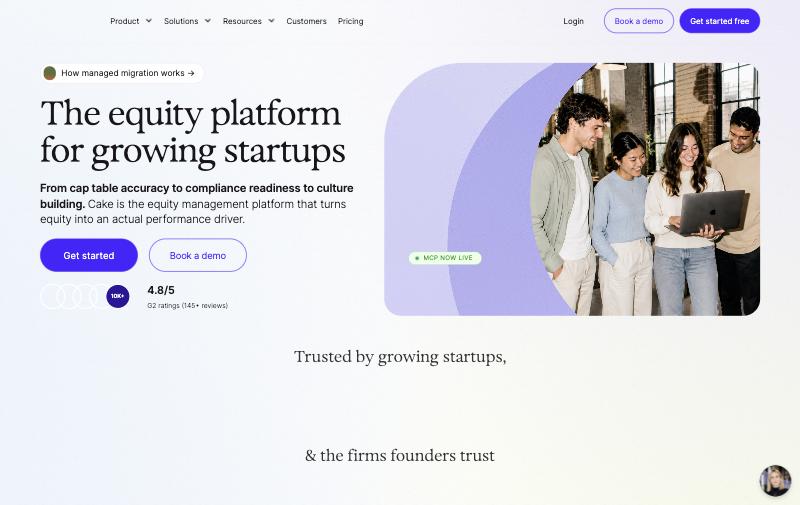
Cake Equity manages your cap table, SAFEs, convertible notes and employee option pool, and lets you model a new round before you sign a term sheet. Investors and lawyers can get verified access to the cap table, which speeds up due diligence.
- Best for: founders who want to see exactly how a round dilutes them and keep clean records for investors.
- Pricing: free for very small cap tables; the Build plan starts at about $1,000 per year for 25 stakeholders.
- Limits: pricing grows with the number of stakeholders, and 409A valuations cost extra.
How to Build Your Fundraising Stack
Most founders need three or four of these startup tools, one for each stage of the raise, and none of them need to be expensive at pre-seed.
- Build your list. Start with funds that have fresh capital using the New VC Funds Database, then widen it with OpenVC. Our comparison of the best startup and VC databases covers more options.
- Prepare your materials. Build the deck in Slidebean, then publish it through FluidDocs so investors can ask it questions.
- Run outreach and track it. Keep every investor conversation in one folk pipeline with stages and follow-up reminders.
- Share your deck and data room. Send your deck through Papermark so you can see which investors read it closely, and open a data room there when diligence starts.
- Close the round. Sign SAFEs through Clerky and use Cake Equity to check dilution and hand investors a clean cap table.
A lean pre-seed setup could be EverythingStartups, OpenVC, Slidebean's free plan and Papermark's free plan. A seed round usually adds folk, Clerky and a cap table tool. If you are still deciding which firms to approach, start with our list of top early-stage VC firms and our guide on how to raise money from VCs.
Frequently Asked Questions
What are the best startup tools for fundraising?
The best setup combines an investor source (EverythingStartups or OpenVC), a deck builder (Slidebean), an interactive deck tool (FluidDocs), a CRM (folk), a deck sharing and data room tool (Papermark), and tools for paperwork and the cap table (Clerky and Cake Equity).
Can I raise a round using only free startup tools?
Mostly, yes. OpenVC is free, Papermark and Slidebean have free plans, and FluidDocs is free for unlimited documents. Clerky charges $9 per SAFE, which is the main cost at pre-seed.
How do I find VC funds that are actively investing?
Look for funds that closed recently, because new funds spend the first years of their life writing initial checks. The EverythingStartups New VC Funds Database tracks these every week, so you can filter for funds that just closed in your sector and stage.
Do I need a data room for a seed round?
Most seed investors ask for financials, the cap table and incorporation documents during diligence. A simple data room in Papermark keeps those files in one place and shows you which investors opened them.
Raise With the Right Startup Tools
Fundraising takes long enough without losing deals to a messy spreadsheet. Pick one tool for each stage, start with the free plans, and upgrade only when your pipeline outgrows them. To see which VC funds raised new capital this week, explore the EverythingStartups New VC Funds Database.
Building a tool for founders? We update this list regularly and offer featured placements. Email hello@everythingstartups.com to have your product considered.